


The Knowledge Gap Crisis: What Happens When Veteran Machinists Retire
The Quiet Shift Happening Across American Manufacturing
Across the United States, manufacturing is undergoing a major transition that isn’t always visible on dashboards or balance sheets. While discussions about automation, reshoring, and workforce shortages dominate headlines, another challenge is unfolding quietly on shop floors: the steady retirement of veteran machinists and technicians who built their careers mastering complex equipment through decades of hands-on experience.
This shift is not just about filling open positions. It is about preserving knowledge that was never fully written down. Many of the most experienced professionals in machining developed their expertise long before digital diagnostics and standardized training programs became widespread. Their understanding of machines often comes from years of listening, feeling, observing, and troubleshooting problems in real time. As they retire, shops risk losing far more than labor. They risk losing instinct.
The Difference Between Training and Experience
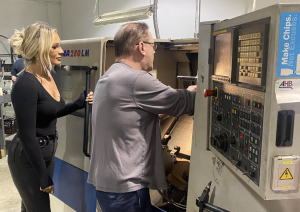 Technical training programs and OEM documentation are essential, but they rarely replace what seasoned machinists know intuitively. Veteran technicians often identify problems before alarms ever trigger. They can recognize subtle tonal changes in a spindle, feel vibration through a housing, or see faint surface inconsistencies that signal deeper issues developing inside the machine.
This kind of awareness comes from repetition over thousands of hours. It cannot be accelerated easily. While modern CNC systems provide extensive data, interpretation still requires experience. Without that perspective, shops may rely too heavily on reactive maintenance or overlook early warning signs entirely, leading to more costly failures later.
Why Tribal Knowledge Matters More Than Ever
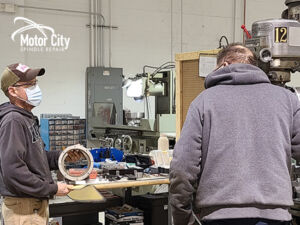 For decades, much of manufacturing’s most valuable knowledge has been informal. It has lived in conversations between shifts, mentorship moments at machines, and lessons learned during late-night breakdowns. Veteran machinists have historically passed down this information organically, often without realizing how critical it was.
As retirements accelerate, that knowledge transfer is no longer guaranteed. Shops are beginning to recognize how much operational continuity depends on preserving these insights. From setup strategies and balancing techniques to diagnostic shortcuts and repair instincts, tribal knowledge often determines how quickly and effectively problems are solved.
The Operational Risks of Losing Experience
When experienced machinists leave without transferring their knowledge, the consequences show up quickly. Shops may experience longer downtime during failures, more frequent emergency repairs, inconsistent part quality, and higher maintenance costs overall. Equipment that once ran smoothly begins showing recurring issues that younger teams struggle to diagnose.
In many cases, the challenge is not a lack of talent among newer workers. It is the reality that complex machines often require contextual understanding built over years. Without mentorship and structured knowledge capture, even well-trained teams can find themselves troubleshooting without a roadmap.
How Shops Are Responding
Forward-thinking manufacturers are beginning to address this challenge intentionally. Many are pairing veteran machinists with younger technicians through mentorship programs, documenting repair procedures in detail, and incorporating advanced diagnostic tools into daily maintenance routines. Some are also leaning more heavily on trusted service partners who bring both experience and modern technology into the process.
Technology is helping bridge part of the gap. Vibration analysis, thermal imaging, dynamic balancing, and advanced testing systems allow teams to detect issues earlier and with greater accuracy. However, these tools are most effective when combined with seasoned judgment and a deep understanding of machine behavior.
Why Experience Still Drives Reliability
 Despite advances in automation and monitoring systems, manufacturing reliability still depends heavily on people. Machines may generate data, but skilled technicians interpret it. Processes may be standardized, but no two breakdowns are ever exactly the same.
The future of American manufacturing will rely on blending emerging talent with preserved experience. Shops that succeed will be those that treat knowledge as a strategic asset and actively work to retain, document, and share it across generations.
Why Shops Trust Motor City Spindle Repair With Their Rebuilds
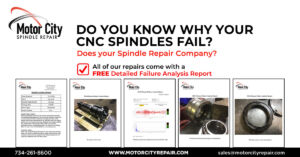
At Motor City Spindle Repair, we understand firsthand how valuable experience truly is. Our team combines decades of hands-on expertise with advanced diagnostic technology to deliver rebuilds that meet the demands of modern manufacturing. Every spindle that comes through our facility is evaluated with precision tools and tested thoroughly to ensure long-term performance.
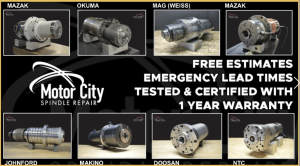
Our technicians rely on more than just equipment. They bring the kind of practical knowledge that only comes from years of rebuilding, balancing, and troubleshooting spindles across a wide range of OEM platforms. From initial inspection through final testing, every step of our process is built around reliability, accuracy, and repeatability.
For maintenance managers and shop owners, trust matters. When downtime is on the line, you need a partner who understands both the technical and operational realities of your equipment. Motor City Spindle Repair delivers that confidence by combining proven experience with industry-leading capabilities.
CONTACT US ANYTIME IF YOU would LIKE TO CHAT WITH OUR EXPERTS OR STOP BY OUR 25,000 SF MANUFACTURING FACILITY LOCATED IN DEARBORN, MICHIGAN!
(734) 261-8600 OR EMAIL US AT SALES@MOTORCITYREPAIR.COM
Need a FREE ESTIMATE? Click HERE

To view our most recent blog post, click HERE