Why U.S. Manufacturing Has a Maintenance Culture Problem (Not a Labor Problem)
 For years, the conversation around U.S. manufacturing has been dominated by one phrase: the labor shortage. It is easy to point to a lack of skilled workers as the root of production challenges, missed deadlines, and declining efficiency. But inside the walls of real machine shops across the country, a different issue is quietly costing companies more time, more money, and more stress.
The truth is this: many shops are not struggling because they lack people. They are struggling because they have built a culture of reactive maintenance instead of proactive care.
This is not a staffing problem. It is a maintenance mindset problem.
The Real Issue: Running Equipment Until It Fails
In too many shops, machines are pushed to their limits every single day. Spindles run hot. Bearings begin to wear. Vibrations slowly increase. Surface finishes start to decline. And yet, production continues.
Why?
Because the machine is still running.
There is a deeply ingrained mindset in manufacturing that says: if it is not completely broken, keep it in production. On the surface, this feels efficient. Stopping a machine for maintenance means lost time, delayed jobs, and immediate impact to output.
But what is often overlooked is the long-term cost of this approach.
When equipment is run until failure, minor issues turn into major failures. A bearing that could have been replaced early turns into a catastrophic spindle failure. A small amount of runout turns into scrap parts, customer complaints, and rework. What could have been a scheduled repair becomes emergency downtime.
And emergency downtime is always more expensive.
Reactive Maintenance Is More Expensive Than You Think

There is the cost of lost production while the machine is down. There is the cost of expedited shipping for emergency parts. There is the cost of overtime to catch up on delayed jobs. There is the cost of scrapped material and rejected parts. And perhaps most importantly, there is the cost of damaged customer trust.
Customers may not see your machines, but they feel the impact when deadlines are missed or quality slips. Over time, those small disruptions add up, and they shape how your shop is perceived in the market.
Reactive maintenance does not just affect machines. It affects reputation.
The Warning Signs Are Always There
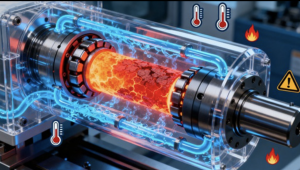 One of the biggest misconceptions in manufacturing is that machine failures happen suddenly. In reality, most failures give off warning signs long before a breakdown occurs.
Spindles begin to run hotter than normal. Unusual noise starts to develop during operation. Surface finishes become inconsistent. Tolerances begin to drift. Vibration increases, even if it is subtle.
These are not random occurrences. They are early indicators of underlying issues.
The problem is not that these signs are invisible. The problem is that they are often ignored or pushed aside in the name of keeping production moving.
A proactive maintenance culture does not ignore these signals. It pays attention to them and acts early, when the fix is still manageable.
Shifting from Reactive to Proactive
 Changing a maintenance culture does not happen overnight, but it starts with a shift in priorities.
Instead of asking, “Can we keep it running?” the question becomes, “Should we keep it running?”
Proactive shops invest in regular inspections, vibration analysis, and scheduled maintenance. They monitor spindle performance, track temperature changes, and pay attention to even the smallest deviations. They understand that a planned repair is always more controlled, more cost-effective, and less disruptive than an emergency failure.
This approach does not reduce productivity. It protects it.
Because when machines are maintained properly, they run more consistently, produce higher quality parts, and experience fewer unexpected breakdowns.
Why Maintenance Culture Matters More Than Ever

In today’s manufacturing environment, competition is not just about who can produce parts the fastest. It is about who can deliver consistent quality, meet deadlines, and operate reliably.
Machines are at the center of that equation.
A shop with a strong maintenance culture has a significant advantage. Their equipment performs better. Their teams operate with less stress. Their customers have greater confidence in their ability to deliver.
On the other hand, a shop that relies on reactive maintenance is constantly fighting fires. Every breakdown creates disruption. Every delay adds pressure. And over time, that instability becomes part of the company’s identity.
Maintenance culture is not just an internal decision. It is a competitive strategy.
Why Maintenance Managers Trust Motor City Spindle Repair
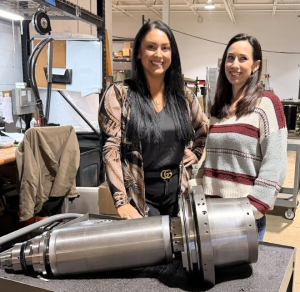 At the center of any strong maintenance strategy is a trusted repair partner. Maintenance managers need more than a vendor. They need a team that understands urgency, precision, and the real cost of downtime.
That is where Motor City Spindle Repair stands apart.
Our approach is built around one core belief: if you cannot test it, you should not rebuild it. Every spindle that comes through our facility is fully evaluated, repaired, and tested to ensure it meets or exceeds OEM performance standards before it ever goes back into your machine.
We do not just fix failures. We help you prevent them.
With in-house grinding, full machine shop capabilities, and advanced balancing and testing processes, we control every step of the rebuild. That means faster turnaround times, tighter quality control, and consistent results you can rely on.
We also support proactive maintenance strategies through services like vibration analysis and failure analysis reporting. Our goal is not just to get you back up and running, but to help you stay running longer.
Maintenance managers across the country trust Motor City Spindle Repair because we understand what is at stake. We know that every spindle we rebuild plays a role in your production, your deadlines, and your reputation.
And we take that seriously.
Final Thoughts
The future of U.S. manufacturing will not be determined solely by how many skilled workers enter the industry. It will be shaped by how effectively shops take care of the equipment they already have.
The shops that win will not be the ones that run machines the hardest. They will be the ones that run them the smartest. Because in the end, maintenance is not just about fixing problems. It is about preventing them.
CONTACT US ANYTIME IF YOU would LIKE TO CHAT WITH OUR EXPERTS OR STOP BY OUR 25,000 SF MANUFACTURING FACILITY LOCATED IN DEARBORN, MICHIGAN!
(734) 261-8600 OR EMAIL US AT SALES@MOTORCITYREPAIR.COM
Need a FREE ESTIMATE? Click HERE

To view our most recent blog post, click HERE