Top 3 Signs Your Spindle Is About to Fail
Heat. Noise. Part Finish Issues.
Spindles almost never fail without warning. The signs are usually there long before a breakdown happens. The real issue is that those warning signs are often brushed off as minor changes or normal wear. Unfortunately, by the time the failure becomes obvious, the damage — and the downtime — can be much more severe.
If you want to avoid unexpected machine stoppages and costly emergency repairs, you need to recognize the early indicators. The three most common signs your spindle is approaching failure are excessive heat, abnormal noise, and declining part finish.
1. Excess Heat
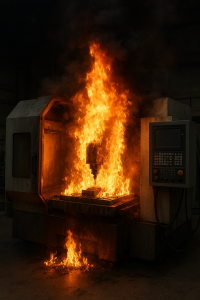 Every spindle generates heat during operation. That is part of normal function. However, a noticeable increase in operating temperature — especially when cutting parameters have not changed — is a red flag.
When bearings begin to wear, friction increases. Increased friction generates additional heat, which then accelerates lubricant breakdown and further bearing degradation. It becomes a compounding cycle that only gets worse with time. What may start as a small temperature increase can quickly turn into significant internal damage.
If operators are noticing that the spindle housing feels hotter than usual, if thermal alarms are appearing more frequently, or if temperatures steadily climb during long production runs, those are not conditions to monitor casually. They are early warning signals that something inside the spindle is no longer operating as it should.
Heat is often called the silent killer because the most serious damage occurs internally before any catastrophic failure is visible from the outside.
2. Unusual Noise
 A healthy spindle has a consistent, recognizable sound. Experienced operators know when something doesn’t sound quite right.
Changes such as a high-pitched whine, a rumbling tone, intermittent chatter, or grinding during acceleration and deceleration should never be ignored. Bearing damage frequently presents first as subtle noise, often noticeable only at certain RPM ranges. Over time, that noise becomes more consistent and more severe as internal components continue to degrade.
What begins as a minor sound change can quickly escalate into shaft journal damage or housing bore issues if left unaddressed. At that point, the repair becomes far more complex and expensive.
If the spindle sounds different, there is a reason. Machines do not develop new noises without cause.
3. Part Finish Issues
Sometimes the spindle doesn’t communicate through sound or temperature first. Sometimes it shows up in the parts.
If surface finish begins to decline, chatter marks appear unexpectedly, tolerances become inconsistent, or tool wear increases without explanation, the spindle should be evaluated. When bearing stiffness decreases or preload shifts, rigidity suffers. That loss of rigidity directly affects surface quality and dimensional stability.
Many shops initially adjust feeds and speeds or check tooling, which is reasonable. However, when process changes fail to correct the issue, the problem may not be programming or tooling — it may be mechanical integrity inside the spindle itself.
Your spindle is the heart of the machine. When rigidity drops, quality follows.
Why Early Action Matters

Catching these signs early allows for a controlled, scheduled repair rather than an emergency situation. When addressed proactively, damage is often limited to bearings and wearable components. Turnaround times are shorter, repair costs are lower, and downtime can be planned around production needs.
When ignored, internal damage can spread to the shaft, housing, and other critical components. At that point, costs increase significantly, and downtime becomes unplanned and disruptive.
The difference between a routine rebuild and a major repair often comes down to recognizing the early indicators and acting quickly.
How Motor City Handles It
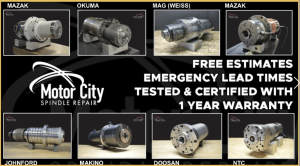
 At Motor City Spindle Repair, every spindle that leaves our facility is fully inspected, precision rebuilt, and test run at maximum RPM. We perform vibration analysis, verify thermal stability, and ensure that performance data supports the repair before it goes back into service.
A spindle should not simply run. It should run correctly, consistently, and reliably.
If you are seeing increased heat, hearing unusual noise, or noticing changes in part finish, do not wait for failure. Early evaluation can save significant time and cost.
Contact Motor City today for a free quote or evaluation, and let’s keep your machines running the way they were designed to.
CONTACT US ANYTIME IF YOU would LIKE TO CHAT WITH OUR EXPERTS OR STOP BY OUR 25,000 SF MANUFACTURING FACILITY LOCATED IN DEARBORN, MICHIGAN!
(734) 261-8600 OR EMAIL US AT SALES@MOTORCITYREPAIR.COM
Need a FREE ESTIMATE? Click HERE

To view our most recent blog post, click HERE