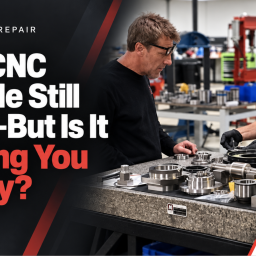
How Transmission Plants Depend on Reliable Spindle Performance
In modern transmission manufacturing, precision is everything. Every component inside a transmission system must meet extremely tight tolerances to ensure reliability, efficiency, and long-term performance. From gear production to housing machining and finishing operations, transmission plants rely heavily on CNC equipment running consistently day after day. At the center of that performance is one critical component that often goes unnoticed until failure occurs: the spindle.
For maintenance managers inside transmission plants, spindle reliability is directly tied to production uptime, part quality, scheduling, and overall operational efficiency. When a spindle begins to fail or unexpectedly goes down, the effects can quickly spread throughout the entire facility.
Why Spindles Are Critical in Transmission Manufacturing
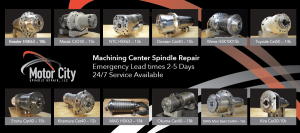 Transmission plants depend on machining centers, turning centers, grinders, and specialty equipment to manufacture highly precise components. These machines operate under demanding conditions, often running around the clock while holding extremely close tolerances on hardened materials.
The spindle is responsible for maintaining the accuracy, speed, and stability required for these machining operations. Whether the machine is roughing large castings or performing fine finishing work on gears and shafts, spindle performance directly affects the quality of the finished component.
Even small issues such as vibration, bearing wear, thermal growth, or imbalance can begin affecting surface finishes, dimensional accuracy, and tool life. In transmission manufacturing, where precision and repeatability are non-negotiable, these issues can quickly become costly.
The Real Cost of Spindle Downtime in Transmission Plants
Unexpected spindle failure creates far more problems than simply stopping one machine. In transmission plants, production lines are often tightly connected, meaning downtime in one area can create bottlenecks throughout the facility.
When a spindle goes down unexpectedly, production schedules can immediately fall behind. Operators may sit idle while maintenance teams scramble for answers. Tooling can become damaged, scrap rates may increase, and overtime costs can rise as teams work to recover lost production time.
For maintenance managers, these situations create enormous pressure. The priority quickly becomes restoring production while also identifying the root cause of the failure to prevent repeat issues. This is why proactive spindle maintenance and trusted repair support are so important in high-volume manufacturing environments.
Warning Signs Maintenance Managers Should Never Ignore
 Spindles rarely fail without warning. In many cases, there are early indicators that performance is beginning to decline. The challenge is identifying those signs before catastrophic failure occurs.
Excessive vibration is one of the most common warning signs. Increased temperatures, unusual noises, poor surface finishes, and inconsistent part quality can also point to spindle problems developing internally. In transmission plants, where machines often run continuously, these issues can escalate quickly if ignored.
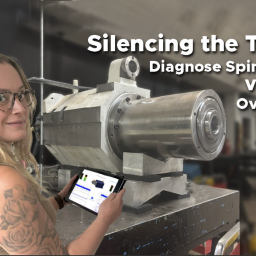
Preventative maintenance programs and vibration analysis play a major role in identifying problems early. Monitoring spindle condition allows maintenance teams to schedule repairs before failures create major production disruptions.
Why Testing Matters After a Spindle Repair
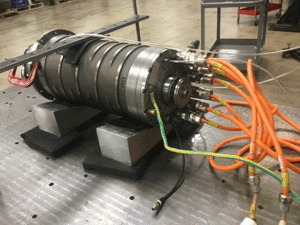
Not all spindle repairs are equal. In transmission manufacturing, repaired spindles must perform reliably under demanding production conditions. Simply replacing bearings without proper testing and validation is not enough.
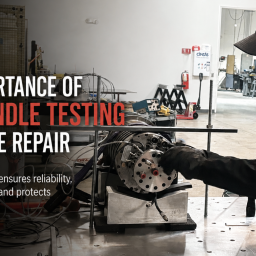
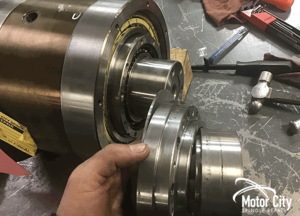
A properly rebuilt spindle should go through detailed inspection, balancing, run-in procedures, and testing before returning to service. This process helps confirm the spindle can maintain proper temperatures, vibration levels, and overall performance during operation.
Testing is especially important for transmission plants because production environments require repeatable accuracy over long periods of operation. A spindle that is not thoroughly tested may fail prematurely or create quality concerns once back in production.
For maintenance managers, confidence in a repaired spindle is critical. Reliable testing helps reduce the risk of repeat downtime and protects production schedules.
The Importance of Fast Turnaround and Reliable Support
 Transmission plants cannot afford extended downtime. When a spindle fails, maintenance managers need quick communication, accurate diagnostics, and dependable turnaround times.
Working with a spindle repair company that understands the urgency of manufacturing downtime makes a major difference. Access to engineering support, replacement components, in-house grinding capabilities, and testing equipment all contribute to faster and more reliable repairs.
Strong communication throughout the repair process also helps maintenance managers plan production schedules more effectively and avoid unnecessary uncertainty.
How Motor City Spindle Repair Supports Transmission Plants
At Motor City Spindle Repair, we understand the demands transmission plants face every day. Production schedules are tight, precision is critical, and downtime can impact an entire operation. That is why our team focuses on providing reliable spindle repair support tailored to the needs of manufacturing facilities.
Our facility repairs machining center spindles, turning center spindles, grinding spindles, and specialty applications used throughout transmission manufacturing. Every spindle goes through detailed inspection, failure analysis, balancing, run-in procedures, and testing to help ensure dependable performance before it returns to production.
Motor City Spindle Repair is trusted by manufacturers because we prioritize communication, quality, and long-term reliability. Our in-house grinding capabilities, experienced technicians, and commitment to testing allow us to support some of the most demanding manufacturing environments in the industry.
We know maintenance managers need more than just a repair. They need a partner that understands production pressure, responds quickly, and delivers confidence when equipment goes back into service. That commitment is what continues to make Motor City Spindle Repair a trusted resource for transmission plants across the manufacturing industry.
CONTACT US ANYTIME IF YOU would LIKE TO CHAT WITH OUR EXPERTS OR STOP BY OUR 25,000 SF MANUFACTURING FACILITY LOCATED IN DEARBORN, MICHIGAN!
(734) 261-8600 OR EMAIL US AT SALES@MOTORCITYREPAIR.COM
Need a FREE ESTIMATE? Click HERE

To view our most recent blog post, click HERE