How Downtime From One Failed Spindle Impacts an Entire Production Schedule
One Spindle Failure Can Affect More Than One Machine
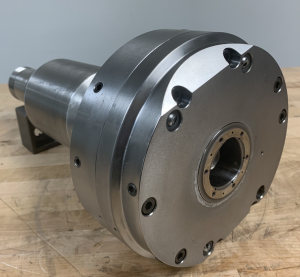
In manufacturing, production schedules are built around precision, timing, and consistency. Every machine on the floor plays a role in keeping operations moving forward. When one CNC spindle fails, many shops initially focus only on the repair itself. However, the true impact reaches much further than the spindle sitting idle in the machine.
A failed spindle can disrupt an entire production schedule within minutes. Jobs get delayed, operators get reassigned, deadlines start slipping, and production managers are forced into reactive decision making. For maintenance managers, a spindle failure is rarely just a maintenance issue. It quickly becomes an operational issue, a scheduling issue, and often a financial issue.
The faster modern manufacturing moves, the more expensive downtime becomes.
Production Bottlenecks Start Immediately
Many shops operate with tight production windows and limited machine availability. If a critical machining center or grinder suddenly goes down because of spindle failure, the workload does not disappear. It gets pushed onto other machines, other shifts, or other employees.
This creates bottlenecks almost immediately. Machines that were already scheduled become overloaded. Operators may need to work overtime. Some jobs may need to be postponed entirely while priority work is rushed through remaining equipment.
For shops running high-volume production or just-in-time manufacturing, even a single day of downtime can throw off customer commitments and delivery timelines. One spindle failure can create a domino effect that impacts multiple departments throughout the facility.
The Financial Impact Adds Up Quickly
 Many maintenance managers understand the repair cost of a spindle, but the hidden costs associated with downtime are often far greater than the repair itself.
Lost production time means lost revenue. Delayed shipments can lead to penalties or strained customer relationships. Emergency outsourcing, expedited shipping, overtime labor, and machine rescheduling all increase operational costs.
In some cases, a spindle failure may even force a company to pause an entire production line because one critical operation cannot be completed elsewhere.
The longer the machine sits idle, the more expensive the situation becomes.
Reactive Maintenance Creates More Risk
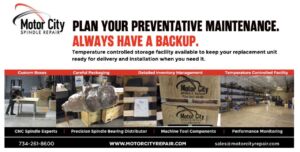 One of the biggest challenges maintenance managers face is balancing production demands with preventative maintenance. In many facilities, machines continue running until a major failure occurs simply because production schedules leave little room for planned downtime.
Unfortunately, reactive maintenance often creates larger disruptions than preventative maintenance ever would have.
Spindles usually show warning signs before catastrophic failure occurs. Increased vibration, unusual temperatures, noise changes, poor surface finishes, or excessive tool wear can all indicate developing spindle problems. Ignoring these warning signs may allow production to continue temporarily, but it often results in larger failures, longer downtime, and more expensive repairs later.
Predictive maintenance tools like vibration analysis and spindle monitoring are becoming increasingly important because they allow maintenance teams to identify issues before production completely stops.
Backup Equipment Can Protect Production Schedules
Many manufacturers are beginning to view spare spindles as production insurance rather than optional inventory.
Having a backup spindle ready to install can dramatically reduce downtime during an unexpected failure. Instead of waiting weeks for repair completion or OEM lead times, maintenance teams can quickly swap in a certified spare and keep production moving.
For facilities running critical machines or high-volume production, this strategy can protect customer deadlines and reduce operational stress significantly.
Prepared shops recover faster when unexpected failures happen.
Communication Between Departments Matters
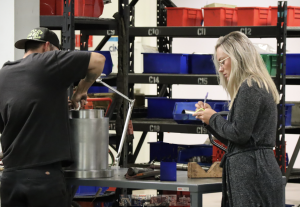 When spindle failures occur, maintenance managers often become the center point between production, operations, purchasing, and upper management. Clear communication becomes critical during these situations.
Production teams need realistic timelines. Management needs accurate expectations regarding repair costs and downtime. Operators need updates regarding scheduling changes and machine availability.
A strong spindle repair partner can help simplify this process by providing detailed evaluations, accurate lead times, failure analysis, and consistent communication throughout the repair process.
The goal is not just fixing the spindle. The goal is minimizing disruption to the entire operation.
Why Maintenance Managers Should Trust Motor City Spindle Repair
 At Motor City Spindle Repair, we understand that downtime affects far more than one machine. Every spindle that enters our facility represents production schedules, customer commitments, and operational pressure for the maintenance teams managing those machines.
Our team specializes in repairing and rebuilding CNC spindles for machining centers, turning centers, and grinding applications across a wide range of OEMs. Every spindle goes through detailed inspection, precision rebuilding, balancing, run-in, and testing processes to ensure reliability before returning to service.
We also understand the importance of speed and communication during emergency situations. Our team works closely with maintenance managers to provide accurate evaluations, clear timelines, and dependable support throughout the repair process.
For shops looking to reduce downtime risk even further, our Spindle Hotel program provides climate-controlled backup spindle storage with certified spare units ready when unexpected failures occur.
At the end of the day, spindle repair is not just about rebuilding components. It is about helping manufacturers protect production schedules, reduce costly downtime, and keep operations moving forward with confidence.
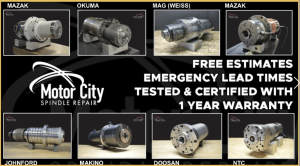
CONTACT US ANYTIME IF YOU would LIKE TO CHAT WITH OUR EXPERTS OR STOP BY OUR 25,000 SF MANUFACTURING FACILITY LOCATED IN DEARBORN, MICHIGAN!
(734) 261-8600 OR EMAIL US AT SALES@MOTORCITYREPAIR.COM
Need a FREE ESTIMATE? Click HERE

To view our most recent blog post, click HERE