When Should a Shop Use a Machining Center Instead of a Turning Center?
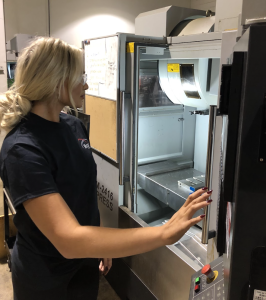 In today’s manufacturing environment, CNC machining centers and CNC turning centers both play critical roles in production. While they may appear similar from a high level, each machine platform is designed for very different applications, cutting conditions, and production goals. For maintenance managers, understanding when a shop should use a machining center instead of a turning center is important not only for productivity, but also for spindle reliability, machine longevity, and overall operational efficiency.
Choosing the correct platform for a specific application can directly affect cycle times, surface finishes, tooling costs, machine wear, and downtime. The wrong machine choice can create unnecessary stress on equipment, reduce production efficiency, and increase long-term maintenance expenses.
Understanding the Difference Between Machining Centers and Turning Centers
A CNC machining center is designed around rotating cutting tools while the workpiece remains stationary. These machines are commonly used for milling, drilling, tapping, boring, and contouring operations. Machining centers are ideal for producing complex parts with multiple surfaces, intricate geometries, pockets, slots, and detailed features.
A CNC turning center operates differently. In a turning application, the workpiece rotates while stationary cutting tools remove material. Turning centers are best suited for cylindrical or round components such as shafts, bushings, hubs, threaded parts, and precision rotational components.
While both machine platforms remove material and produce precision parts, the way they generate cutting forces and handle workloads is completely different.
When a Machining Center Is the Better Choice
 A machining center is typically the better solution when a shop is producing complex parts that require multiple operations or multi-axis movement. These machines provide flexibility for parts that cannot easily be manufactured on a turning platform.
Shops that manufacture aerospace components, tooling plates, molds, medical parts, and intricate production components often rely heavily on machining centers because of their ability to perform detailed cutting operations on multiple faces of a workpiece.
Machining centers also become advantageous when reducing setup time is a priority. Many modern machining centers can complete several operations within a single setup, which improves accuracy while reducing part handling and labor costs.
For maintenance managers, machining centers often make sense in facilities where production demands versatility and frequent job changes. Horizontal and vertical machining centers are especially valuable in environments that require precision contouring, aggressive milling, and high-speed material removal.
When a Turning Center Makes More Sense
 Turning centers are typically the preferred option when the majority of production involves cylindrical or rotational components. These machines are specifically engineered to handle radial cutting forces efficiently while maintaining excellent concentricity and repeatability.
For high-volume production of shafts, rollers, threaded components, and round parts, turning centers often outperform machining centers in both speed and efficiency. Because the workpiece rotates continuously during cutting, turning operations can remove material very quickly while maintaining consistent finishes.
Modern turning centers equipped with live tooling and sub-spindles have also become increasingly capable of handling secondary operations, reducing the need to move parts between multiple machines.
For maintenance managers focused on throughput and cycle time reduction, turning centers are often the most efficient choice for rotational part production.
How Machine Choice Impacts Spindle Reliability
One of the most overlooked differences between machining centers and turning centers is how each machine platform affects spindle loading and wear patterns.
Machining center spindles experience a wide range of cutting forces due to side loading, interrupted cuts, aggressive tool changes, and high-speed milling operations. These conditions place significant stress on spindle bearings, drawbar systems, tapers, and balancing components.
Over time, maintenance teams may notice vibration issues, thermal growth, taper wear, or bearing fatigue in machining center spindles if preventative maintenance is not prioritized.
Turning center spindles operate under different stresses. Because the workpiece itself rotates, turning spindles often experience continuous radial loading and sustained cutting pressure during roughing operations. Heavy chips, heat generation, and coolant contamination can also contribute to spindle wear and bearing degradation.
Understanding these different wear patterns is critical for maintenance managers trying to reduce downtime and extend spindle life.
The Role of Automation and Multi-Tasking Machines
Modern manufacturing continues to blur the line between machining centers and turning centers. Automation systems, robotic loading, pallet changers, live tooling, and mill-turn platforms are allowing shops to complete more operations in fewer setups.
Machining centers now support highly automated lights-out production for complex parts, while advanced turning centers can perform milling, drilling, and tapping operations directly within the turning cycle.
For maintenance managers, this evolution creates both opportunities and challenges. Multi-tasking machines improve efficiency, but they also increase spindle complexity and place greater demands on preventative maintenance programs.
As machine capabilities grow, spindle reliability becomes even more important to maintaining production schedules and avoiding costly downtime.
Why Preventative Maintenance Matters on Both Platforms

Regardless of whether a shop uses machining centers or turning centers, spindle condition remains one of the most important factors affecting machine performance.
Waiting until visible failure occurs often leads to catastrophic damage, emergency downtime, scrap production, and expensive repairs. Monitoring spindle vibration, drawbar force, lubrication systems, temperature, and machine performance can help maintenance teams identify problems before they become major failures.
Preventative maintenance programs not only extend spindle life, but also improve production consistency, surface finish quality, and overall machine reliability.
For maintenance managers, proactive spindle monitoring is no longer optional in competitive manufacturing environments. It is a critical part of maintaining uptime and protecting production capacity.
Why Maintenance Managers Trust Motor City Spindle
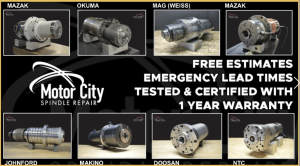
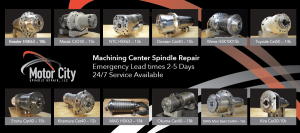
 At Motor City Spindle, we understand the unique operating demands placed on both machining center and turning center spindles. Our team rebuilds, tests, balances, and certifies spindles from a wide range of OEMs including Mazak, Makino, Okuma, DMG Mori, Doosan, Kitamura, and many others.
Every spindle that enters our facility undergoes detailed inspection and failure analysis to identify the true root cause of the issue rather than simply replacing damaged components. Our in-house grinding department, balancing capabilities, testing equipment, and experienced technicians allow us to restore spindle performance with precision and reliability.
Every rebuilt spindle is run-in, tested, and certified before returning to production. We also back our repairs with a one-year in-service warranty that begins when the spindle is installed in the machine, not when it ships.
For maintenance managers, downtime impacts far more than a single machine. It affects production schedules, labor efficiency, customer delivery timelines, and profitability. That is why manufacturers across North America trust Motor City Spindle to help keep their machining centers and turning centers operating at peak performance.