The Hidden Cost of “Running It Until It Fails”
In a busy manufacturing environment, it is easy to justify running equipment until it absolutely has to come out of service. Production demands are high, schedules are tight, and every hour of uptime feels critical. Pulling a spindle early can seem unnecessary, especially when the machine is still running.
But the reality is much different. Waiting for failure is often one of the most expensive decisions a maintenance manager can make. What looks like efficiency on the surface usually leads to higher costs, longer downtime, and bigger problems than expected.
The Illusion of Saving Time and Money
Running a spindle until failure often feels like the most efficient use of the component. It gives the impression that you are maximizing its lifespan and avoiding unnecessary maintenance.
In reality, this approach trades controlled downtime for unpredictable downtime. A planned rebuild allows you to schedule service during slower production periods, prepare ahead of time, and maintain control over labor and logistics. An unexpected failure removes all of that control. It forces immediate action, often during peak production, and creates disruption across your operation.
What appears to be a cost-saving decision usually results in more expensive and less manageable outcomes.
What Catastrophic Failure Really Looks Like
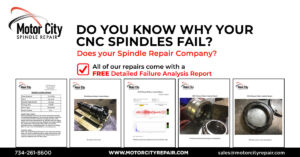 There is a significant difference between a spindle that is rebuilt at the right time and one that is pushed beyond its limits. When a spindle is run too long, the internal damage does not stay contained.
Bearings continue to degrade, often reaching a point where they damage surrounding components. Shafts can become misaligned or worn, and excessive heat begins to affect tolerances and internal structure. What could have been a straightforward rebuild becomes a more complex repair involving additional parts, more labor, and longer turnaround times.
In some cases, the damage goes too far and the spindle can no longer be salvaged. At that point, the cost is no longer just a repair. It becomes a full replacement, along with all the downtime that comes with it.
The Ripple Effect on Your Machine
A failing spindle rarely impacts only itself. As performance declines, it begins to affect the rest of the machine.
You may start to notice subtle changes at first. Surface finishes may not look as clean as they once did. Vibration may increase slightly. Tool life may shorten without an obvious explanation. These are early signs that something is changing internally.
If these signs are ignored, the problem grows. Tool holders, tapers, and other critical components can begin to wear prematurely. The machine starts compensating for a failing spindle, which puts additional stress on the entire system. What began as a spindle issue can quickly become a broader machine reliability problem.
Downtime Costs More Than You Think
 The true cost of downtime is often underestimated. It is not just the repair itself that impacts your operation.
When a spindle fails unexpectedly, production stops immediately. Deadlines are missed, schedules are pushed back, and additional labor is often required to recover lost time. There is also the added pressure of keeping customers satisfied while dealing with internal disruption.
Planned maintenance allows you to control these variables. It gives you the ability to choose when downtime happens and how it is managed. That level of control is what separates reactive maintenance from a strategy that actually protects your operation.
The Impact on Your Team
Running equipment until failure does not just affect machines. It affects the people responsible for keeping them running.
When failures happen unexpectedly, maintenance teams are forced into reactive situations. Decisions have to be made quickly, often without the time needed to fully evaluate the problem. This increases stress and creates an environment where mistakes are more likely.
A proactive approach gives your team the ability to plan, inspect, and act with intention. It allows them to focus on preventing problems instead of constantly responding to them. Over time, this leads to better performance, more consistency, and a stronger overall operation.
A Better Approach to Spindle Maintenance

The most effective maintenance strategies are built around awareness and timing. Instead of waiting for failure, successful operations monitor spindle performance and act when early signs appear.
Changes in vibration, temperature, noise, and part quality all provide insight into spindle health. Paying attention to these indicators allows maintenance managers to make informed decisions about when to schedule service.
This approach does not just prevent failure. It extends spindle life, reduces costs, and creates a more stable production environment.
Why Maintenance Managers Trust Motor City Spindle
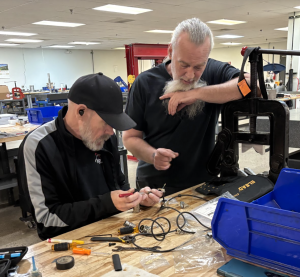 Choosing the right repair partner is critical when it comes to spindle performance and long-term reliability. Maintenance managers trust Motor City Spindle because the focus goes beyond simply repairing what is broken.
Every spindle that comes through is carefully inspected to understand the true cause of failure. This allows underlying issues to be addressed, not just the visible damage. The rebuilding process is completed with precision, using high-quality components and strict attention to detail.
Testing and balancing are a critical part of the process. A spindle is not considered complete until it has been properly run, evaluated, and verified for performance. This ensures that when it goes back into your machine, it is ready to operate reliably under real production conditions.
Motor City operates with a clear standard. If it cannot be tested, it should not be rebuilt. That level of accountability gives maintenance managers confidence that they are not just fixing a problem, but preventing the next one.
Final Thought
Running a spindle until it fails may seem like the best way to get the most out of your equipment. In reality, it often leads to higher costs, more downtime, and greater risk.
The better approach is to stay ahead of failure, make informed decisions, and work with partners who understand the importance of doing things the right way.
Because in manufacturing, control is everything. And waiting for failure is the fastest way to lose it.
CONTACT US ANYTIME IF YOU would LIKE TO CHAT WITH OUR EXPERTS OR STOP BY OUR 25,000 SF MANUFACTURING FACILITY LOCATED IN DEARBORN, MICHIGAN!
(734) 261-8600 OR EMAIL US AT SALES@MOTORCITYREPAIR.COM
Need a FREE ESTIMATE? Click HERE

To view our most recent blog post, click HERE