Why “Good Shops” Still Have Bad Failures
Understanding Why Identical CNC Spindles Don’t Fail the Same Way
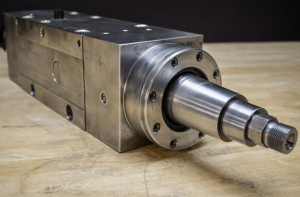 In manufacturing, it is easy to assume that well-run shops should experience fewer failures. Clean floors, skilled operators, modern equipment, and structured maintenance programs all point toward reliability. But in reality, even the most disciplined operations still deal with unexpected spindle failures. Two identical machines running similar parts in different facilities can produce completely different outcomes. One spindle runs for years without issue, while the other fails prematurely and repeatedly.
For maintenance managers, this is one of the most frustrating realities of the job. When everything appears to be done “right,” failures feel unpredictable. The truth is that most failures are not random. They are the result of subtle differences in process, environment, and decision-making that build up over time.
The Illusion of “Same Conditions”
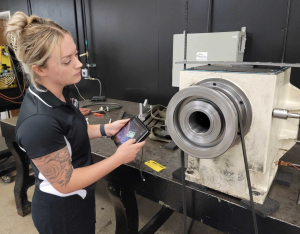 On paper, two spindles may look identical. They share the same OEM, model, tooling, and application. However, the actual operating conditions are rarely the same. Even small variations in setup, material batches, tool wear, or cutting strategies can introduce differences in load and heat generation.
These differences are often too small to trigger alarms or immediate concern. Instead, they quietly influence bearing wear, lubrication performance, and internal balance. Over time, what started as a minor variation becomes a measurable problem. One spindle continues to operate within tolerance, while the other begins to degrade.
For maintenance managers, this reinforces an important reality. Consistency on paper does not guarantee consistency in performance. The smallest process variation can create long-term reliability issues.
Maintenance Culture vs. Maintenance Schedule

Most shops have a preventative maintenance schedule. Fewer have a true maintenance culture. There is a difference.
A schedule focuses on completing tasks at set intervals. Bearings are checked, lubrication systems are serviced, and inspections are performed according to a timeline. While this approach is necessary, it does not always capture real-time machine behavior.
A maintenance culture goes deeper. It prioritizes observation, accountability, and proactive decision-making. Operators report subtle changes in sound or vibration. Maintenance teams investigate early warning signs instead of waiting for scheduled intervals. There is a shared understanding that machines communicate issues long before failure occurs.
Two shops can follow the same maintenance schedule and still experience very different outcomes. The shop with a strong maintenance culture will catch problems earlier, reducing the likelihood of catastrophic failure.
The Role of Heat and Load Over Time
Heat is one of the most overlooked contributors to spindle failure. It does not always present as a sudden spike. More often, it builds gradually through repeated cycles of operation.
Slight increases in cutting load, minor imbalances, or inefficient toolpaths can elevate internal temperatures. Over time, this affects bearing preload, lubrication viscosity, and overall spindle stability. These changes may not be noticeable day-to-day, but they accelerate wear significantly.
One shop may unknowingly operate within a slightly higher thermal range due to process differences. Another may maintain more stable conditions through optimized tooling and cutting strategies. The result is a noticeable difference in spindle lifespan, even though both shops believe they are running similar programs.
For maintenance managers, understanding thermal impact is critical. Heat is not just a symptom of failure. It is often the cause.
Experience Can Introduce Risk
Experience is one of the most valuable assets on a shop floor, but it can also introduce risk when it leads to shortcuts. Skilled operators and technicians often rely on instinct and past success to make decisions quickly. While this can improve efficiency, it can also bypass critical checks.
For example, a minor vibration may be dismissed because “it has always run like that.” A slight change in sound may be ignored because production deadlines take priority. Over time, these small decisions allow issues to progress unchecked.
Less experienced teams may follow procedures more strictly, catching problems earlier as a result. This creates an interesting dynamic where highly experienced shops can still encounter preventable failures.
Maintenance managers must balance experience with discipline. Encouraging teams to question assumptions and investigate small changes can significantly improve reliability.
Why Failures Are Often Misdiagnosed
When a spindle fails, the focus is often placed on the rebuild itself. Questions arise about component quality, assembly, or balancing. While these factors are critical, they are not always the root cause.
Many failures originate from operating conditions that continue even after the spindle is repaired. Without identifying and correcting these conditions, the same issues will reappear. This leads to repeated failures that seem unrelated but are actually part of the same underlying problem.
A proper failure analysis goes beyond the spindle. It examines application data, load conditions, thermal history, and machine behavior leading up to the failure. This level of insight is what separates a short-term fix from a long-term solution.
What This Means for Maintenance Managers
For maintenance managers, the takeaway is clear. Reliability is not determined by equipment alone. It is shaped by the interaction between machines, processes, and people.
Two identical spindles will not fail the same way because they are not operating in identical environments. Small differences compound over time, leading to dramatically different outcomes. The goal is not to eliminate variation entirely, but to recognize and manage it before it leads to failure.
By focusing on early warning signs, understanding the impact of heat and load, and fostering a strong maintenance culture, shops can significantly improve spindle performance and lifespan.
Why Maintenance Managers Trust Motor City Spindle Repair
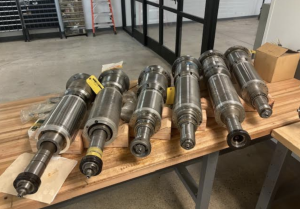 When failures do occur, the quality of the rebuild and the depth of analysis make all the difference. Maintenance managers trust Motor City Spindle Repair because the focus goes beyond simply replacing components.
Every spindle that comes through the facility is evaluated with a testing-first approach. If a spindle cannot be properly tested, it is not considered complete. This ensures that performance is verified, not assumed. Each rebuild includes a detailed inspection and analysis to identify contributing factors, not just visible damage.
Motor City Spindle Repair is built around precision, consistency, and accountability. From high-speed balancing to rigorous run-in procedures, every step is designed to return the spindle to optimal performance. More importantly, the team works to provide insight into why the failure occurred in the first place, helping maintenance managers prevent repeat issues.
With a one-year in-service warranty that begins when the spindle is installed, maintenance teams gain confidence knowing their investment is protected during real operating conditions. Combined with responsive support and a deep understanding of real-world machining environments, Motor City Spindle Repair becomes more than a vendor. It becomes a partner in reliability.
Spindles do not fail overnight. They follow a path shaped by countless small decisions and conditions. Understanding that path is what allows maintenance managers to stay ahead of failure instead of reacting to it.
CONTACT US ANYTIME IF YOU would LIKE TO CHAT WITH OUR EXPERTS OR STOP BY OUR 25,000 SF MANUFACTURING FACILITY LOCATED IN DEARBORN, MICHIGAN!
(734) 261-8600 OR EMAIL US AT SALES@MOTORCITYREPAIR.COM
Need a FREE ESTIMATE? Click HERE

To view our most recent blog post, click HERE