Why Grinding Spindles Require a Different Level of Precision Than Standard Machining Spindles
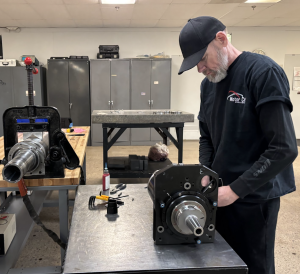 In the world of CNC machining, all spindles are important, but grinding spindles operate in an entirely different category when it comes to precision requirements. While standard machining spindles are designed to handle cutting forces, material removal, and production efficiency, grinding spindles are built for something even more demanding: extreme accuracy at incredibly tight tolerances.
For maintenance managers overseeing grinding operations, understanding the unique demands of grinding spindles is critical. Even the smallest issue inside a grinding spindle can immediately impact part quality, surface finish, dimensional accuracy, and production consistency. What might be considered acceptable variation in a standard machining application can become a major problem in a grinding environment.
Grinding applications leave almost no room for error. That is why grinding spindles require specialized repair processes, advanced testing procedures, and extremely precise rebuilding practices.
Grinding Applications Demand Ultra-High Precision
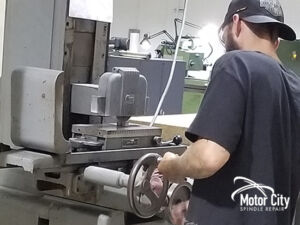 Grinding machines are commonly used in industries where precision is everything. Aerospace, medical, automotive, defense, and tool manufacturing operations often rely on grinding processes to achieve finishes and tolerances that traditional machining simply cannot produce.
Unlike conventional milling or turning operations, grinding removes extremely small amounts of material at very high spindle speeds. Because of this, even microscopic inaccuracies inside the spindle can create visible problems on the finished component.
Runout, vibration, imbalance, bearing preload issues, taper inaccuracies, or thermal instability can all affect the final result. In many grinding applications, tolerances are measured in microns. Surface finish expectations are extremely demanding, and consistency is critical across long production runs.
This means the spindle itself becomes one of the most important components in the entire grinding process.
Higher Speeds Mean Higher Risk
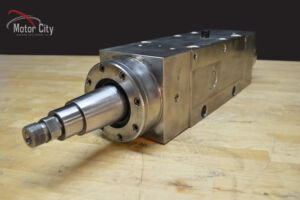 Grinding spindles often operate at significantly higher speeds than standard machining spindles. These elevated RPM ranges place tremendous stress on the spindle bearings, lubrication systems, balancing, and internal components.
At high speeds, even minor imbalance conditions can create damaging vibration levels. Over time, this vibration can accelerate bearing wear, reduce accuracy, and shorten spindle life.
Heat also becomes a major concern. Grinding naturally generates substantial heat during operation, and excess thermal growth inside the spindle can negatively affect tolerances and repeatability. If temperatures are not properly controlled, maintenance managers may begin seeing issues such as inconsistent finishes, taper growth, dimensional variation, or premature bearing failure.
Because grinding spindles operate under such demanding conditions, rebuilding them requires far more than simply replacing bearings and reassembling components.
Bearing Precision Is Critical

One of the biggest differences between grinding spindles and standard machining spindles is the level of precision required during bearing installation and preload setup.
Grinding spindle bearings must be installed with incredible accuracy. Improper preload, contamination during assembly, or even slight mounting inconsistencies can dramatically affect spindle performance.
The bearing arrangement directly impacts spindle rigidity, thermal stability, vibration levels, and overall accuracy. If preload is too loose, the spindle may develop runout or instability. If preload is too tight, excessive heat can build up and shorten bearing life.
This is why grinding spindle rebuilds require experienced technicians, clean assembly environments, precision measurement equipment, and extensive testing procedures.
Balancing Plays a Massive Role
Balancing is another area where grinding spindles separate themselves from standard machining spindles.
Because grinding spindles operate at extremely high RPMs, every rotating component inside the spindle must be properly balanced. Even a slight imbalance can generate vibration that affects surface finish quality and accelerates internal wear.
Proper balancing helps reduce vibration, improve bearing life, maintain surface finish consistency, and increase overall spindle reliability.
For maintenance managers, vibration-related problems are often one of the first indicators that a grinding spindle may require attention. Increased noise, finish inconsistencies, temperature spikes, or changing vibration trends should never be ignored.
Contamination Is One of the Biggest Threats
Grinding environments create extremely fine abrasive particles that can become highly destructive if contamination enters the spindle.
Grinding dust can damage bearing surfaces, compromise lubrication systems, and create premature wear throughout the spindle assembly. Once contamination enters the spindle, damage can escalate quickly.
This is why proper sealing systems, air purge systems, and contamination control measures are so important in grinding applications.
Maintenance managers who prioritize preventative maintenance, spindle monitoring, and regular inspections can often prevent catastrophic failures before they occur.
Why Testing Matters So Much for Grinding Spindles
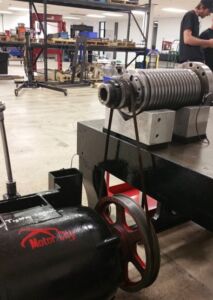 Testing is one of the most important parts of any grinding spindle rebuild.
A properly rebuilt grinding spindle should go through extensive testing procedures to verify vibration levels, temperature stability, bearing performance, and overall spindle accuracy before returning to production.
Without proper testing, problems may not appear until the spindle is back in the machine and affecting production quality.
Comprehensive run-in procedures, vibration analysis, balance verification, and precision measurement processes help ensure the spindle is ready to perform under real-world operating conditions.
For maintenance managers, this level of testing provides confidence that the spindle will return to production capable of maintaining the tolerances and finishes their operation depends on.
Why Maintenance Managers Should Trust Motor City Spindle Repair With Their Grinding Spindles
Grinding spindles require a specialized level of precision, experience, and testing that not every repair facility can provide. At Motor City Spindle Repair, our team understands the unique challenges that come with rebuilding high-precision grinding spindles.
Our facility is equipped to handle complex grinding spindle rebuilds with a strong focus on accuracy, balancing, vibration control, and testing. From bearing installation and preload setup to taper restoration and final run-in procedures, every step is performed with precision in mind.
We also utilize advanced testing procedures to verify spindle performance before units leave our facility. Every spindle is carefully evaluated for vibration, temperature stability, and overall operating condition to help ensure reliable performance once it returns to production.
In addition, our in-house grinding capabilities allow us to restore critical spindle geometries with exceptional accuracy. This gives maintenance managers confidence that their rebuilt spindle will meet the demands of high-precision grinding applications.
At the end of the day, grinding operations cannot afford unnecessary downtime, inconsistent finishes, or repeat spindle failures. Maintenance managers need a repair partner they can trust to rebuild their spindles correctly the first time.
That is exactly what our team at Motor City Spindle Repair strives to deliver every day.
CONTACT US ANYTIME IF YOU would LIKE TO CHAT WITH OUR EXPERTS OR STOP BY OUR 25,000 SF MANUFACTURING FACILITY LOCATED IN DEARBORN, MICHIGAN!
(734) 261-8600 OR EMAIL US AT SALES@MOTORCITYREPAIR.COM
Need a FREE ESTIMATE? Click HERE

To view our most recent blog post, click HERE