What Happens Inside a CNC Spindle During a Crash
 In manufacturing, spindle crashes are often treated as isolated incidents. A loud impact happens, the machine alarms out, and production stops. The visible damage is usually obvious. Broken tooling, damaged holders, poor part quality, or a machine that no longer holds tolerance are all common signs. What many maintenance managers do not immediately see, however, is the hidden internal damage that can continue developing long after the crash itself.
A CNC spindle is one of the most precise and highly stressed components in a machine tool. Even a minor crash can create internal damage that affects bearing life, taper accuracy, shaft integrity, balance, and overall spindle performance. In some cases, the spindle may continue running for weeks or even months before a catastrophic failure occurs. By then, the repair is often more extensive and significantly more expensive.
Understanding what happens inside a spindle during a crash can help maintenance managers make faster decisions, reduce downtime, and prevent secondary damage that impacts production long after the initial incident.
The Initial Impact
When a spindle crash occurs, the force generated during impact travels through the entire spindle assembly almost instantly. Whether the crash involves a tool hitting a fixture, a workpiece collision, improper programming, or a machine overtravel event, the spindle absorbs an enormous amount of shock load.
Modern CNC spindles are designed for precision, speed, and rigidity, but they are not designed to absorb sudden impacts repeatedly. During a crash, the bearings often take the first major hit. Angular contact bearings inside the spindle are engineered to operate with very specific preload values and extremely tight tolerances. A sudden impact can deform bearing races, create brinelling, or alter the preload conditions within the spindle assembly.
Even if the spindle appears to run normally after the crash, microscopic damage may already exist inside the bearings. Over time, that damage grows through heat, vibration, and continued operation.
Bearing Damage and Hidden Wear
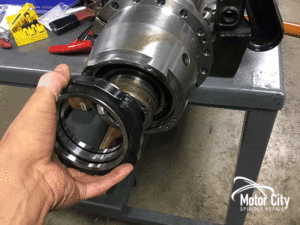
One of the most common results of a spindle crash is internal bearing damage. In many situations, the spindle may not immediately fail after the event. Instead, the bearings begin deteriorating gradually.
Brinelling is especially common after impact events. This occurs when the bearing balls force small indentations into the raceways during sudden shock loading. Once those imperfections exist, the bearing can no longer rotate smoothly. Vibration increases, temperatures rise, and spindle performance begins declining.
Maintenance teams may first notice subtle symptoms such as inconsistent surface finishes, increased vibration readings, unusual spindle noise, or elevated operating temperatures. Because the damage is internal, many shops continue running production until the spindle eventually reaches catastrophic failure.
This is why post-crash inspections are critical, even when the machine appears operational.
Taper Damage and Tool Holding Problems
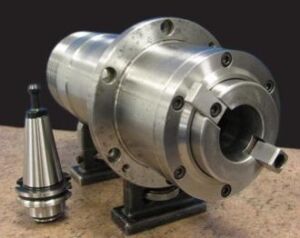
Another major concern during a spindle crash is taper damage. The spindle taper is responsible for maintaining precise contact between the spindle and the tool holder. Any distortion or damage in this area can create major machining issues.
During a collision, the taper can become fretted, scored, or slightly distorted. Even extremely small taper inaccuracies can create tool runout issues, poor finishes, chatter, and premature tool wear.
In severe crashes, the drawbar system can also become compromised. Belleville washers may weaken, retention force can decrease, and tool clamping pressure may no longer meet specification. When this happens, tool holders may begin slipping during heavy cutting operations, creating additional damage to both tooling and spindle components.
For maintenance managers, taper inspections following a crash are essential. Many spindle issues that appear to be tooling or programming problems actually originate from unnoticed taper damage.
Shaft Runout and Balance Issues
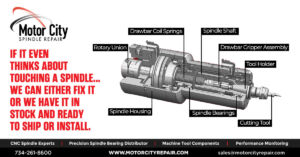
The spindle shaft itself can also suffer damage during impact events. Depending on the severity of the crash, the shaft may experience slight bending or runout conditions that are not immediately visible without precision inspection equipment.
High-speed spindles rely heavily on balance and rotational accuracy. Even minimal shaft deviation can introduce vibration throughout the spindle assembly. Over time, this additional vibration accelerates wear on bearings, tooling interfaces, and rotating components.
In some cases, shops replace bearings after a crash only to experience repeat failures shortly afterward. The root cause is often an underlying shaft or balance issue that was never identified during the initial repair process.
Proper spindle rebuilding requires complete evaluation of shaft geometry, balance characteristics, and taper condition to ensure the spindle can safely return to production.
Encoder and Sensor Damage
Modern CNC spindles contain more than just bearings and rotating assemblies. Many units also include encoders, sensors, cooling systems, and orientation components that are vulnerable during crash events.
An impact strong enough to damage bearings can also affect encoder alignment or sensor functionality. This may result in orientation faults, speed inconsistencies, positioning errors, or intermittent machine alarms.
These issues are sometimes difficult to diagnose because they may not appear immediately after the crash. Instead, electrical or positional problems begin surfacing gradually during production.
This is why comprehensive spindle testing after a crash is so important. A spindle should never simply be repaired mechanically and returned to service without complete functional testing.
Why Post-Crash Testing Matters
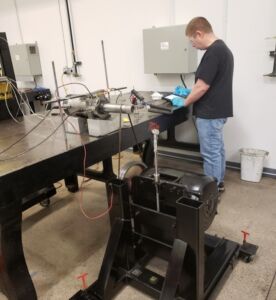 One of the biggest mistakes shops make after a spindle crash is assuming the spindle is fine simply because it still runs. Internal damage often develops progressively, and continuing to operate a compromised spindle can lead to much larger failures later.
Post-crash spindle testing allows maintenance managers to identify hidden problems before they escalate into catastrophic downtime. Vibration analysis, thermal monitoring, taper inspections, drawbar force testing, and precision runout measurements all play an important role in determining the true condition of the spindle.
By identifying problems early, shops can often prevent secondary damage to shafts, housings, tooling systems, and machine components.
Preventative action after a crash almost always costs less than waiting for total spindle failure during production.
Why Maintenance Managers Trust Motor City Spindle Repair

At Motor City Spindle Repair, we understand that spindle crashes create more than just repair concerns. They create production pressure, scheduling challenges, and costly downtime for maintenance teams trying to keep operations running.
Our team specializes in diagnosing both visible and hidden spindle damage following crash events. Every spindle that enters our facility undergoes a detailed evaluation process that includes complete disassembly, failure analysis, precision inspection, and testing to identify issues that may otherwise go unnoticed.
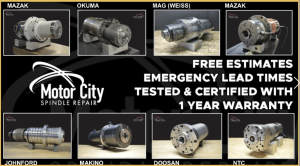
We rebuild and repair a wide range of OEM spindle types, including Mazak, Makino, Okuma, DMG Mori, Haas, Doosan, Kessler, Weiss, and many others. Our facility is equipped for precision balancing, taper grinding, bearing replacement, run-in testing, and full spindle certification before units return to service.
Every rebuilt spindle is thoroughly tested to ensure vibration levels, temperature performance, runout, and overall spindle functionality meet strict standards before shipment. We also back our spindle rebuilds with a one-year in-service warranty that begins once the spindle is installed in the machine.
For maintenance managers, that means confidence that the spindle returning to your facility is ready for production.
When spindle crashes happen, quick decisions matter. Choosing the right repair partner can make the difference between a short recovery and recurring downtime issues that continue affecting production long after the initial failure.
If your facility has experienced a spindle crash, Motor City Spindle Repair is ready to help evaluate the damage, provide a detailed repair quote, and get your operation back up and running as quickly as possible.
CONTACT US ANYTIME IF YOU would LIKE TO CHAT WITH OUR EXPERTS OR STOP BY OUR 25,000 SF MANUFACTURING FACILITY LOCATED IN DEARBORN, MICHIGAN!
(734) 261-8600 OR EMAIL US AT SALES@MOTORCITYREPAIR.COM
Need a FREE ESTIMATE? Click HERE

To view our most recent blog post, click HERE