Your Preventative Maintenance Plan Is Lying to You
Why “Scheduled Maintenance” Isn’t Protecting Your Spindles the Way You Think
 For most maintenance managers, preventative maintenance feels like control. There is a schedule. There are intervals. There is a plan in place that should, in theory, prevent unexpected downtime.
But in many shops, that plan is not as preventative as it looks.
It is reactive, just delayed.
The Illusion of Control in Scheduled Maintenance
Time-based maintenance schedules were built for simplicity. Replace components every set number of hours. Inspect equipment on a fixed interval. Follow a checklist and move on.
On paper, it works.
In reality, two identical spindles running the same program will not age the same way. Load conditions change. Materials vary. Operators run machines differently. Coolant quality shifts. Environmental factors creep in.
A spindle does not fail because the calendar says it should. It fails because internal conditions reach a breaking point.
When maintenance is driven only by time, it ignores what is actually happening inside the spindle.
Why Time-Based Intervals Fall Short

A scheduled plan assumes wear happens in a predictable, linear way. That is rarely the case.
Bearing wear accelerates under heat. Imbalance develops gradually, then suddenly worsens. Lubrication breakdown is influenced by contamination and operating conditions, not just hours.
This creates two major problems.
First, components are often replaced too early. That drives unnecessary cost without improving reliability.
Second, and more importantly, components are often replaced too late. By the time the scheduled interval arrives, damage has already progressed far beyond what a simple service can correct.
The result is unexpected downtime that the “preventative” plan was supposed to prevent.
The Shift to Condition-Based Maintenance
The most effective maintenance programs are not driven by time. They are driven by condition.
Condition-based maintenance focuses on what the spindle is actually telling you in real time.
Vibration levels begin to trend upward. Temperature increases beyond normal operating range. Noise patterns change. Runout starts to drift. Surface finish quality declines.
These are not random issues. They are early warning signs.
When tracked and interpreted correctly, they allow maintenance teams to act before failure occurs, not after damage is already done.
This is the difference between reacting to a failure and preventing one.
What Your Spindle Is Already Telling You
 Every spindle provides data, whether it is being monitored or not.
A rise in vibration is often the first indicator of bearing wear or imbalance. Increased heat points to lubrication issues or internal friction. Changes in cutting performance can signal loss of rigidity or preload breakdown.
Operators may compensate without realizing it. Slowing feeds. Adjusting offsets. Accepting minor finish issues.
These adjustments mask the problem temporarily, but they also allow damage to continue progressing inside the spindle.
By the time the issue becomes obvious, it is no longer minor.
Why Many PM Programs Become Reactive
Even with a preventative plan in place, many shops still experience frequent, unplanned downtime.
This usually comes down to one issue. The plan is built around routine, not reality.
Maintenance gets scheduled because it is on the calendar, not because the machine needs it. Inspections are performed, but not always tied to measurable condition data. Decisions are made based on time, not trends.
Over time, the plan becomes a checklist instead of a strategy.
That is when preventative maintenance quietly becomes reactive maintenance with a delay.
Building a Maintenance Strategy That Actually Prevents Failure
 A strong maintenance program still includes scheduled tasks. Those are important for consistency and accountability.
But the real value comes from layering in condition-based insights.
Tracking vibration trends. Monitoring temperature. Paying attention to changes in performance. Acting on early indicators instead of waiting for failure.
It also requires alignment between production and maintenance. Preventative work has to be prioritized before a breakdown forces it.
The goal is not to do more maintenance. The goal is to do the right maintenance at the right time.
Why Maintenance Managers Trust Motor City Spindle Repair
At Motor City Spindle Repair, the focus has never been just on rebuilding spindles. It is on understanding why they fail in the first place and helping shops prevent it from happening again.
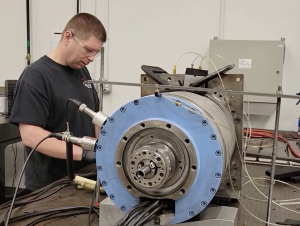
Every spindle that comes through is fully tested, analyzed, and evaluated. Not just repaired. The goal is to identify the root cause of failure, whether it is imbalance, bearing breakdown, contamination, or operating conditions.
That testing process matters. Because without it, you are guessing.
Motor City also supports maintenance teams beyond the repair itself. From vibration analysis to failure reports, the goal is to give you real data you can act on. Data that helps you move away from time-based assumptions and toward condition-based decisions.
If you cannot measure it, you cannot manage it. And if you cannot test it, you should not rebuild it.
For maintenance managers who are tired of being reactive, the difference is clear. You need more than a schedule. You need insight.
And that is exactly what Motor City delivers.

CONTACT US ANYTIME IF YOU would LIKE TO CHAT WITH OUR EXPERTS OR STOP BY OUR 25,000 SF MANUFACTURING FACILITY LOCATED IN DEARBORN, MICHIGAN!
(734) 261-8600 OR EMAIL US AT SALES@MOTORCITYREPAIR.COM
Need a FREE ESTIMATE? Click HERE

To view our most recent blog post, click HERE