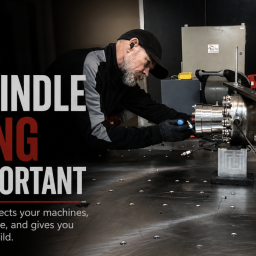
The Importance of Spindle Run-In and Testing
Why Proper Testing Matters More Than Most Shops Realize
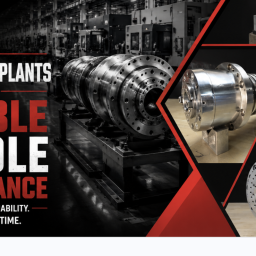
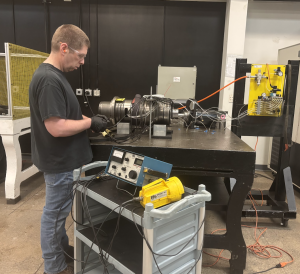 In manufacturing, every micron matters. Machine tools are expected to hold tight tolerances, maintain repeatability, and perform consistently under demanding production schedules. At the center of that performance is the spindle. Whether a shop is running high-speed machining centers, turning centers, or grinding equipment, the spindle is one of the most critical components in the entire machine.
When a spindle fails and is sent out for repair, many maintenance managers focus heavily on turnaround time and cost. While those factors are important, one area that should never be overlooked is spindle run-in and testing. A spindle rebuild is only as good as the testing process behind it. Without proper run-in procedures and comprehensive testing, even a freshly rebuilt spindle can experience premature failure, instability, excessive heat, or vibration issues once it returns to production.
For maintenance managers responsible for uptime and machine reliability, understanding the importance of spindle run-in and testing can make a major difference in long-term equipment performance and overall production efficiency.
What Is Spindle Run-In?
Spindle run-in is the controlled process of gradually operating a rebuilt spindle through increasing speed ranges over a designated period of time. This process allows new bearings, lubrication systems, and internal components to properly seat and stabilize before the spindle is placed back into full production.
During a rebuild, many critical components are replaced or remanufactured. Bearings are installed with precise preload settings, tapers are reground, shafts are balanced, and internal geometries are restored. Even when all components are assembled correctly, the spindle still needs time to thermally stabilize and adapt to operating conditions.
Skipping or rushing the run-in process can create unnecessary stress on new bearings and rotating assemblies. Excessive heat buildup, lubrication inconsistencies, and improper preload stabilization can all occur if the spindle is immediately pushed to maximum RPM without controlled conditioning.
A proper run-in process helps ensure the spindle is operating smoothly, efficiently, and safely before it ever reaches the customer’s machine.
Why Testing Is Critical After a Rebuild
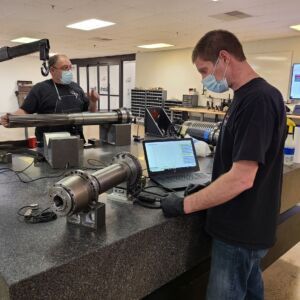
Testing is one of the most important steps in the spindle repair process because it verifies that the spindle is truly ready for production. Unfortunately, not every repair facility performs the same level of testing. Some shops may only perform minimal verification checks before shipping a spindle back to the customer.
Comprehensive spindle testing provides maintenance managers with confidence that the spindle can handle real-world operating conditions. During testing, technicians monitor critical performance indicators such as vibration levels, temperature growth, noise, bearing performance, and overall spindle stability.
If issues exist inside the spindle, testing is where those problems are identified before the spindle is returned to the machine. Discovering a vibration issue or thermal problem in a controlled testing environment is far better than discovering it after reinstalling the spindle during production.
Proper testing also allows repair technicians to verify taper accuracy, balance quality, and overall spindle performance at operating speeds. This process helps ensure the spindle performs as intended once it is back on the shop floor.
The Connection Between Testing and Spindle Longevity
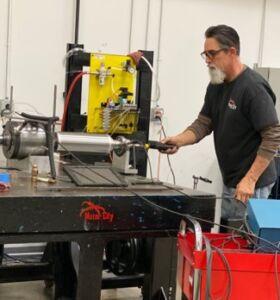
Maintenance managers are constantly under pressure to reduce downtime and maximize equipment life. One of the biggest contributors to premature spindle failure is improper rebuild validation.
A spindle that is not properly tested may initially appear functional but develop issues shortly after installation. Excessive vibration can damage bearings and tooling. Thermal instability can impact part quality and dimensional accuracy. Improper preload settings can shorten bearing life dramatically.
Comprehensive testing helps eliminate these risks before the spindle is returned to service. It provides an opportunity to identify abnormalities early and make corrections before the spindle reaches production conditions.
In many cases, the testing phase can reveal hidden problems that would otherwise go unnoticed until the spindle is operating under load inside the machine. For maintenance managers, this level of validation is essential for preventing repeat failures and avoiding costly production interruptions.
Why Vibration Analysis Matters
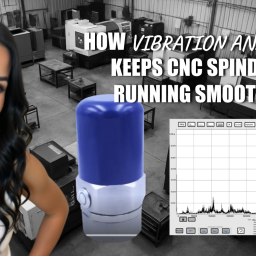
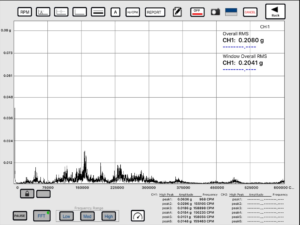 One of the most valuable parts of spindle testing is vibration analysis. Vibration is often the first indicator that something inside the spindle is not operating correctly.
During testing, vibration levels are monitored throughout different speed ranges to evaluate bearing condition, balance quality, and rotational stability. Even minor vibration issues can eventually lead to poor surface finishes, reduced tool life, increased heat generation, and premature component wear.
Modern spindle testing equipment allows technicians to identify vibration patterns and pinpoint potential issues before they become catastrophic failures. For maintenance managers focused on predictive maintenance strategies, vibration analysis plays a major role in ensuring spindle reliability.
The Risk of Choosing Speed Over Quality
In today’s manufacturing environment, downtime is expensive. Many shops feel pressure to get a spindle repaired and back in production as quickly as possible. However, rushing the rebuild process often leads to corners being cut during run-in and testing.
A spindle may leave the repair facility faster, but if it fails again shortly after installation, the shop ultimately loses far more time and money. Repeat failures create additional downtime, lost production, emergency service costs, and frustration for maintenance teams.
A quality repair process requires patience, precision, and proper validation. Maintenance managers should look for repair partners that prioritize long-term reliability over simply shipping units as quickly as possible.
Why Maintenance Managers Trust Motor City Spindle Repair

At Motor City Spindle Repair, spindle run-in and testing are treated as critical parts of the repair process, not optional steps. Every spindle is carefully evaluated, rebuilt, balanced, run-in, and tested to help ensure it is ready for production before it leaves the facility.
Motor City understands that maintenance managers are responsible for keeping machines running efficiently and minimizing downtime. That is why the company invests heavily in testing procedures, vibration analysis, and precision inspection processes to verify spindle performance under operating conditions.
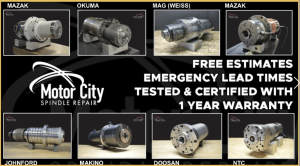
The team at Motor City works on a wide range of machining center, turning center, and grinding spindles from major OEMs including Mazak, Makino, DMG Mori, Okuma, and many others. With in-house grinding capabilities, precision balancing, and advanced testing procedures, the company focuses on delivering reliable repairs built for long-term performance.
Motor City Spindle Repair also offers a one-year in-service warranty that begins upon installation in the machine, helping maintenance managers feel confident in the reliability of their repaired equipment.
In manufacturing, spindle reliability directly impacts production performance. Proper run-in and testing are not just technical procedures. They are essential investments in machine uptime, part quality, and long-term operational success.
CONTACT US ANYTIME IF YOU would LIKE TO CHAT WITH OUR EXPERTS OR STOP BY OUR 25,000 SF MANUFACTURING FACILITY LOCATED IN DEARBORN, MICHIGAN!
(734) 261-8600 OR EMAIL US AT SALES@MOTORCITYREPAIR.COM
Need a FREE ESTIMATE? Click HERE

To view our most recent blog post, click HERE