Common CNC Spindle Upgrades Maintenance Managers Should Consider
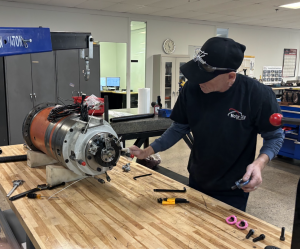 A spindle rebuild is not always limited to replacing worn components and returning the unit to its original condition. In some cases, the rebuild process provides an opportunity to improve performance, reliability, lubrication, contamination resistance, or bearing life.
For maintenance managers, the right upgrade can help address recurring spindle problems and better prepare the machine for current production demands. However, every upgrade must be evaluated carefully. A modification that benefits one spindle may create heat, vibration, lubrication, or load problems in another.
Increasing Spindle RPM
An RPM increase may help a machine support faster cutting speeds, smaller tooling, improved surface finishes, or new production requirements. Increasing spindle speed, however, involves much more than changing a parameter in the control.
The spindle’s bearings, preload, lubrication system, motor, cooling system, drawbar, tooling interface, and rotating components must all be capable of operating safely at the proposed speed. Dynamic balancing and vibration control also become increasingly important as RPM rises.
Hybrid bearings with ceramic rolling elements may be considered for certain high-speed applications because they can run faster than comparably sized all-steel bearings. Oil-air lubrication can also support very high spindle speeds while controlling operating temperature. SKF’s technical guidance explains how super-precision bearings and oil-air lubrication units can support increased operating speeds in machining spindles.
Before approving an RPM upgrade, maintenance managers should make sure the entire spindle system is evaluated—not just the bearings.
Upgrading Bearing Load Capacity
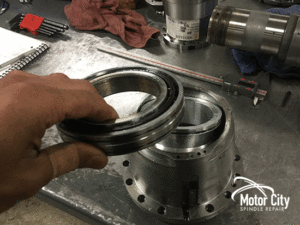
Some spindles experience operating loads that exceed what the original bearing arrangement was designed to handle. This may happen when production requirements change, heavier cuts are introduced, larger tools are used, or the spindle repeatedly experiences high axial or radial loads.
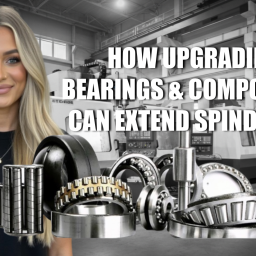
A higher-load bearing configuration may involve changing the bearing arrangement, contact angle, preload, bearing series, internal design, or number of bearings. For example, a tandem arrangement may improve load capacity in a specific direction, while a back-to-back arrangement may provide greater rigidity and support combined loading.
Increasing load capacity must be balanced against speed, heat generation, lubrication requirements, and available space within the spindle housing. More preload or a heavier bearing arrangement is not automatically better. An overly aggressive configuration can increase friction and operating temperature or limit maximum spindle speed.
The correct upgrade should be based on the spindle design, actual cutting loads, failure history, and production expectations.
Converting From Grease to Oil-Mist or Oil-Air Lubrication
Grease lubrication is practical, self-contained, and effective for many spindle applications. However, some high-speed spindles may benefit from a controlled oil-based lubrication system.
Oil-mist and oil-air systems continuously deliver a small amount of lubricant to the bearings. Depending on the design, this can help support higher operating speeds, control bearing temperature, and maintain a consistent lubricant supply. SKF identifies oil-air lubrication as a minimum-quantity method that allows super-precision bearings to operate at very high speeds with relatively low operating temperatures. SKF lubrication guidance provides additional information on this approach.
This conversion requires more than changing the lubricant. The spindle housing must have the correct lubricant passages, drainage, sealing, and air-management features. The machine must also be capable of supporting the lubrication equipment and monitoring its operation.
Maintenance managers should consider the added maintenance requirements of an external lubrication system before approving the conversion.
Converting From Oil Mist to Grease Packed for Life
In other applications, simplifying the lubrication system may provide greater value than increasing speed. A spindle originally designed for oil mist may be a candidate for conversion to grease lubrication when its current operating speed, load, temperature, and duty cycle allow it.
A grease-packed arrangement can eliminate dependence on an external oil-mist system, reduce lubrication equipment maintenance, and remove potential failure points associated with oil delivery. It may also provide a cleaner operating environment.
This conversion is not appropriate for every spindle. Grease selection, fill quantity, bearing design, preload, operating temperature, and maximum RPM must all be evaluated. Too much grease can create churning, friction, and excessive heat, while too little may leave critical bearing surfaces inadequately lubricated.
The spindle must also complete a controlled run-in process so the grease can distribute properly throughout the bearing arrangement.
Converting to Sealed Spindle Bearings
Contamination is a common contributor to premature spindle bearing failure. Coolant, moisture, metal particles, dust, and other debris can damage bearing surfaces and degrade the lubricant.
Sealed spindle bearings may provide additional protection by helping keep lubricant inside the bearing while limiting the entry of contamination. Certain sealed super-precision bearings are supplied with a controlled amount of grease and are considered lubricated for life. SKF’s super-precision bearing guidance notes that sealed designs can help retain lubricant and prevent contaminants from entering the bearing.
The effect of the seals on speed, friction, temperature, and internal clearances must still be considered. The spindle housing, bearing arrangement, operating environment, and target RPM should all be reviewed before making the conversion.
Failure History Should Guide the Upgrade
Maintenance managers should avoid approving an upgrade simply because it is available. The most useful modifications address a documented operating problem or a clearly defined production goal.
Repeated contamination may support a sealed-bearing conversion. Recurring overload damage may indicate the need for a different bearing configuration. Excessive heat at high RPM may require changes to the bearings, preload, lubrication, cooling, or balance condition.
A detailed spindle evaluation and failure analysis report can help identify whether the original design, operating conditions, maintenance practices, or machine environment contributed to the failure. That information should guide the upgrade recommendation.
Testing Is Essential After an Upgrade
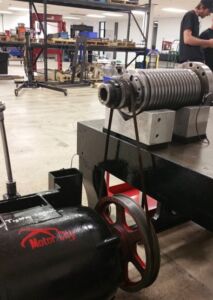 Any change to spindle speed, bearings, preload, lubrication, or sealing can affect operating temperature and vibration. The upgraded spindle should complete a controlled run-in and be tested under conditions that reflect its intended operation.
Technicians should monitor temperature, vibration, lubricant performance, runout, balance, and overall spindle behavior. If the spindle is expected to operate at a higher RPM, testing should confirm that it can reach that speed safely and consistently.
For maintenance managers, documented testing provides confidence that the upgrade was validated before the spindle returned to production.
Why Maintenance Managers Should Trust Motor City Spindle Repair
Motor City Spindle Repair approaches upgrades from the perspective of an experienced spindle rebuilder—not simply a bearing distributor. Our team evaluates the complete spindle, reviews its failure condition, and considers the machine’s operating requirements before recommending a modification.
We understand how bearing selection, preload, lubrication, sealing, dynamic balance, vibration, temperature, and spindle speed work together. Our in-house machining, grinding, inspection, and testing capabilities allow us to address more than the visible symptoms of a spindle failure.
Motor City also provides detailed failure analysis reporting and tests rebuilt spindles according to their operating requirements. Our philosophy is simple: if we cannot properly test it, we will not rebuild it.
For maintenance managers, that means upgrade recommendations based on the spindle’s actual design and production needs. Whether the goal is increased RPM, greater load capacity, improved lubrication, better contamination protection, or longer service life, Motor City Spindle Repair can help determine whether the upgrade is practical and verify its performance before the spindle returns to service.
CONTACT US ANYTIME IF YOU would LIKE TO CHAT WITH OUR EXPERTS OR STOP BY OUR 25,000 SF MANUFACTURING FACILITY LOCATED IN DEARBORN, MICHIGAN!
(734) 261-8600 OR EMAIL US AT SALES@MOTORCITYREPAIR.COM
Need a FREE ESTIMATE? Click HERE

To view our most recent blog post, click HERE