Why Replacing Bearings Does Not Automatically Fix a Spindle
When a CNC spindle begins running hot, producing unusual noise, showing excessive vibration, or creating poor surface finishes, the bearings are often blamed first. While damaged bearings are a common part of spindle failure, replacing them does not automatically correct the underlying problem.
A spindle is a complete precision assembly. Its bearings, shaft, housing, taper, lubrication system, seals, drawbar components, spacers, and cooling system must all work together. If the original cause of failure is not identified and corrected, a new set of bearings may experience the same damage.
Bearing Damage Is Often a Symptom
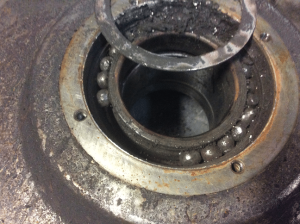 Failed bearings can reveal that something is wrong, but they do not always explain why it happened. Contamination, improper lubrication, excessive heat, incorrect preload, crashes, electrical discharge, misalignment, and worn spindle components can all damage bearings.
Simply removing the failed bearings and installing new ones addresses the visible damage without necessarily correcting its source. This can lead to continued vibration, excessive temperature, poor cutting performance, or another premature failure.
A complete spindle evaluation should determine what damaged the bearings before the rebuilding process begins.
The Shaft and Housing Must Be Inspected
The spindle shaft and housing contain precision bearing fits that are critical to performance. If these fits are worn, tapered, out of round, or damaged, they may no longer support the bearings correctly.
Installing new bearings into damaged fits can allow movement between components, prevent the correct preload from being maintained, and create uneven loading. Even small dimensional problems can reduce bearing life and affect spindle accuracy.
These surfaces should be measured with calibrated equipment and compared with the proper specifications. When necessary, damaged fits may require grinding, machining, plating, sleeving, or another approved restoration process.
Bearing Preload Must Be Correct
 Preload helps control rigidity, runout, heat generation, and spindle performance. Too little preload can allow excessive internal movement, while too much preload can generate heat and place unnecessary stress on the bearings.
Preload can be affected by the bearing configuration, spacer dimensions, fits, lubrication method, operating speed, and expected thermal growth. A replacement bearing set must be installed as part of a properly engineered assembly rather than treated as an independent component.
If the spacers are worn or incorrectly sized, installing new bearings alone will not produce the correct operating conditions.
Lubrication Problems Can Damage New Bearings
Spindle bearings depend on the correct type and amount of lubrication. Both insufficient and excessive lubrication can cause failure.
Too little lubrication may allow metal-to-metal contact and excessive wear. Too much grease can create churning, resistance, and elevated operating temperatures. In air-oil systems, blocked lines, incorrect settings, contaminated air, or damaged fittings can prevent the bearings from receiving proper lubrication.
If the lubrication problem that caused the original failure is not corrected, replacement bearings may quickly show the same symptoms.
Contamination Must Be Eliminated
Dirt, coolant, moisture, metal particles, and other contaminants can damage precision bearing surfaces. Contamination may enter through damaged seals, poor air pressure, leaking components, improper handling, or an ineffective purge system.
A complete rebuild should include thorough cleaning and inspection of the spindle components. Seals, O-rings, fittings, and other protective components should also be evaluated and replaced when necessary.
Installing clean bearings into a contaminated assembly does not solve the problem. The contamination source must be identified and corrected.
The Spindle Taper May Still Be Damaged
Bearing replacement does not correct a worn, crashed, bell-mouthed, or damaged spindle taper. A spindle may rotate smoothly and still struggle to hold tools accurately.
Taper damage can contribute to excessive runout, poor tool contact, chatter, inconsistent finishes, and shortened tool life. The taper should be inspected for geometry, contact, runout, and overall condition.
When required, spindle taper grinding should be completed by an experienced repair facility with the equipment needed to verify accuracy after the process.
Drawbar Problems Can Affect Performance
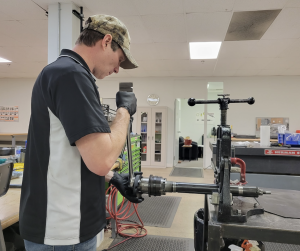 The drawbar and tool-retention system are essential to safe and accurate spindle operation. Worn springs, damaged gripper fingers, incorrect retention force, or other drawbar problems can allow the toolholder to move during operation.
This movement may create vibration or poor finishes that appear to be bearing-related. It can also damage the spindle taper and place additional stress on the bearings.
A complete spindle rebuild should include inspection and testing of the drawbar assembly when applicable.
Cooling and Thermal Problems Must Be Considered
Spindles generate heat during operation, and that heat must be controlled. Restricted coolant passages, incorrect chiller settings, damaged cooling jackets, or poor coolant flow can cause the spindle to operate outside its intended temperature range.
Excessive heat changes internal clearances and can affect bearing preload. It may also contribute to lubricant breakdown, dimensional instability, and premature component wear.
New bearings will not correct a cooling problem. The spindle and its supporting systems must be evaluated together.
Dynamic Balance and Runout Still Matter
 A spindle may contain new bearings and still experience vibration if the rotating assembly is not properly balanced. Imbalance can place additional loads on the bearings, affect surface finish, and reduce spindle life.
Runout must also be measured at the appropriate locations. Checking only one surface may not reveal problems with the shaft, taper, bearing fits, or assembled spindle.
A successful rebuild requires verified mechanical accuracy, dynamic balance, and stable operation throughout the spindle’s intended speed range.
Final Testing Confirms the Complete Rebuild

A spindle should not be considered repaired simply because it contains new bearings. It must be properly assembled, run in, and tested.
Final testing should evaluate operating temperature, vibration, runout, lubrication performance, noise, and overall stability. The spindle should be gradually brought through its operating range so technicians can confirm that the complete assembly is functioning correctly.
Without proper testing, maintenance managers have no objective confirmation that the spindle is ready to return to production.
Why Maintenance Managers Should Trust Motor City Spindle Repair
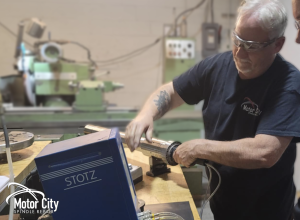 Motor City Spindle Repair does more than replace bearings. Our team evaluates the complete spindle assembly to identify the actual cause of failure and determine what is required for a reliable rebuild.
We inspect critical components, verify precision fits, evaluate the lubrication system, check the spindle taper, review the drawbar assembly when applicable, and restore damaged components using our in-house machining and grinding capabilities. Each spindle is then assembled, balanced, run in, and tested to verify its performance before it is returned to the customer.
Our goal is not to install new bearings and hope the problem is resolved. Our goal is to rebuild the entire unit correctly, address the conditions that contributed to the failure, and help maintenance managers reduce the risk of repeat downtime.
If we cannot test it, we will not rebuild it. Every completed rebuild is also backed by Motor City Spindle Repair’s one-year in-service warranty.
CONTACT US ANYTIME IF YOU would LIKE TO CHAT WITH OUR EXPERTS OR STOP BY OUR 25,000 SF MANUFACTURING FACILITY LOCATED IN DEARBORN, MICHIGAN!
(734) 261-8600 OR EMAIL US AT SALES@MOTORCITYREPAIR.COM
Need a FREE ESTIMATE? Click HERE

To view our most recent blog post, click HERE