Why In-House Grinding and Machining Matter During a Spindle Rebuild
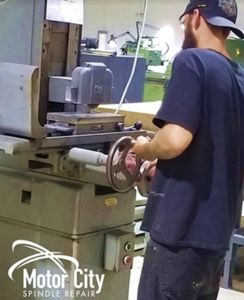 When a CNC spindle fails, maintenance managers need more than a quick bearing replacement. They need a complete rebuild that restores accuracy, reliability, and performance while minimizing downtime. Choosing a spindle repair provider with in-house grinding and machining capabilities can make a significant difference in both repair quality and turnaround time.
A Spindle Rebuild Is More Than New Bearings
Bearings are a critical part of a spindle rebuild, but they are not always the only components affected by a failure. The spindle may also have a damaged taper, worn bearing journals, compromised shaft surfaces, or damaged internal components.
Installing new bearings without correcting these issues can lead to excessive runout, vibration, heat, poor surface finishes, and premature bearing failure. In-house grinding and machining allow the repair provider to address the complete spindle instead of treating the rebuild as a basic bearing replacement.
Greater Control Over Repair Quality
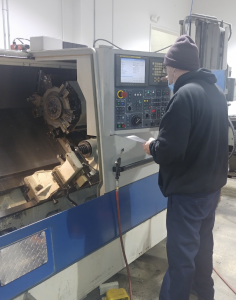 Spindle components operate within extremely tight tolerances. Even a small dimensional error can affect bearing fit, preload, runout, and vibration.
When grinding and machining are completed in-house, spindle technicians can communicate directly with the machinists performing the work. Measurements and repair requirements can be reviewed quickly, helping reduce miscommunication and unnecessary delays.
This gives the repair provider greater control over each component from the initial inspection through final assembly and testing.
Faster and More Predictable Turnaround
Sending components to outside vendors can add transportation time, scheduling delays, and additional inspections to a spindle rebuild. If a part returns outside the required specifications, it may need to be sent out again.
An in-house grinding and machine shop eliminates many of these delays. Components can be prioritized based on the urgency of the repair and moved more efficiently through inspection, restoration, assembly, and testing.
For maintenance managers, this means a more predictable repair timeline and fewer outside factors that could extend machine downtime.
Restoring Critical Spindle Components
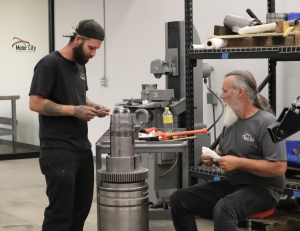 The spindle taper, bearing journals, and shaft surfaces all play an important role in spindle performance. A damaged taper can cause runout, poor tool retention, inconsistent machining, and reduced tool life. Worn bearing journals can affect bearing fit, generate heat, and shorten bearing life.
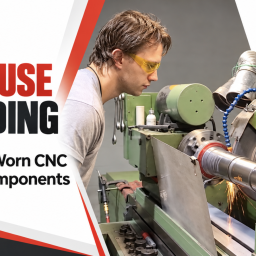
In-house grinding allows these critical surfaces to be restored when possible. Machining capabilities also allow a repair provider to repair, reverse engineer, or manufacture certain spacers, sleeves, locknuts, and other internal components that may be damaged, obsolete, or difficult to source.
Correcting these components helps ensure that new bearings are installed into an accurate and properly restored assembly.
Better Coordination and Accountability
A spindle rebuild is a connected process. Inspection findings affect machining decisions, and repaired components influence bearing selection, preload, balancing, and final testing.
When these services are performed within the same facility, technicians and machinists can collaborate throughout the rebuild. If a concern is discovered during assembly, it can be addressed quickly without involving another vendor.
This also creates a clearer line of accountability. The repair company remains responsible for the component restoration, assembly, and final performance of the spindle.
Final Testing Confirms the Repair
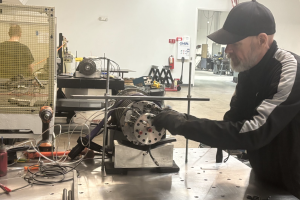 Precision grinding and machining must be supported by thorough final testing. After assembly, the spindle should be tested under controlled conditions whenever possible.
Run-in procedures, vibration analysis, temperature monitoring, dynamic balancing, and full-speed testing help confirm that the repaired components are working correctly as part of the complete spindle assembly.
Why Maintenance Managers Should Trust Motor City Spindle Repair
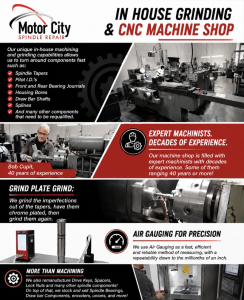 Motor City Spindle Repair understands that maintenance managers need dependable repairs, clear communication, and accurate turnaround expectations. Our in-house grinding and machine shop allows us to maintain greater control over critical spindle components throughout the rebuild process.
Our technicians and machinists work together to address damaged tapers, worn journals, compromised shaft surfaces, and other internal components. Every rebuild is approached as a complete repair—not simply a bearing replacement.
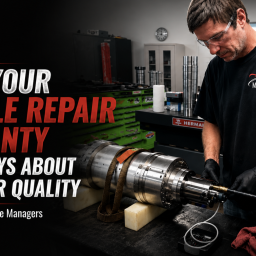
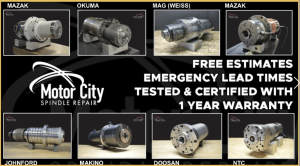
From incoming inspection and precision component work to assembly, balancing, and final testing, our goal is to return a spindle that performs reliably in your machine. We also stand behind our rebuilds with a one-year in-service warranty, giving maintenance managers added confidence in the quality and longevity of the repair.
When spindle downtime affects production, Motor City Spindle Repair has the experience and in-house capabilities to manage the rebuild from beginning to end.
CONTACT US ANYTIME IF YOU would LIKE TO CHAT WITH OUR EXPERTS OR STOP BY OUR 25,000 SF MANUFACTURING FACILITY LOCATED IN DEARBORN, MICHIGAN!
(734) 261-8600 OR EMAIL US AT SALES@MOTORCITYREPAIR.COM
Need a FREE ESTIMATE? Click HERE

To view our most recent blog post, click HERE