What Your CNC Spindle’s Operating Temperature Is Telling You
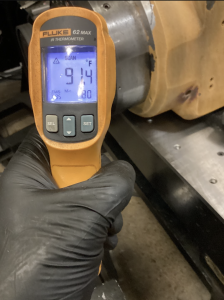 A CNC spindle naturally generates heat while it is running. Bearings rotate at high speeds, lubrication moves through the assembly, and internal components expand as the spindle reaches its normal operating condition. Some temperature increase is expected, but a sudden change or consistent upward trend may be an early warning that something inside the spindle is no longer operating correctly.
For maintenance managers, monitoring spindle temperature can provide valuable information before a minor issue becomes an unexpected failure. The important thing is not simply whether a spindle feels warm. It is whether the temperature is normal and consistent for that specific spindle, machine, speed, load, and operating environment.
Understanding Normal Spindle Temperature
There is no single temperature that is considered normal for every CNC spindle. Operating temperature depends on several factors, including spindle design, bearing configuration, maximum RPM, lubrication method, cooling system, production cycle, and ambient shop conditions.
A spindle may become warm during startup and then stabilize once it reaches operating temperature. This can be completely normal. Maintenance teams should be more concerned when the spindle takes longer than usual to stabilize, runs noticeably hotter than its established baseline, or continues increasing in temperature throughout the production cycle.
Creating a temperature baseline is one of the most useful steps a maintenance department can take. Recording temperatures under consistent speeds and loads makes it easier to recognize changes before they begin affecting part quality or machine availability.
Why Spindle Warm-Up Matters
 A proper warm-up cycle allows the spindle bearings, lubricant, and internal components to reach operating temperature gradually. This is especially important after the machine has been idle for an extended period or when the shop temperature is significantly different from the spindle’s normal operating temperature.
Running a cold spindle immediately at maximum speed can cause rapid thermal expansion and place unnecessary stress on the bearings. It may also prevent the lubricant from distributing properly throughout the bearing system.
Maintenance managers should verify that operators follow the machine manufacturer’s recommended warm-up procedure. Skipping warm-up routines to save a few minutes can contribute to heat-related problems and shorten spindle life over time.
Excessive Bearing Preload Can Generate Heat
Bearing preload plays an important role in spindle rigidity, accuracy, and performance. However, incorrect or excessive preload can create additional friction inside the bearing set. That friction generates heat and may cause the spindle temperature to rise faster than expected.
A spindle with excessive preload may also develop abnormal vibration, noise, reduced speed capability, or premature bearing damage. Because preload must match the bearing configuration and spindle application, it should never be treated as a guess or adjusted without the proper technical information.
When a spindle consistently runs hot after a rebuild or bearing replacement, preload should be considered as part of the evaluation.
Lubrication Problems Can Cause Overheating
Both too little and too much lubrication can increase spindle temperature. Insufficient lubrication allows greater contact and friction between bearing surfaces. Excessive grease can create churning and resistance as the bearings rotate, which also produces heat.
Oil-air and oil-mist systems can develop their own problems if the flow rate, pressure, timing, or delivery path is incorrect. A blocked line, contaminated lubricant, or malfunctioning delivery system may prevent the bearings from receiving the lubrication they need.
Maintenance managers should monitor lubrication-system alarms, inspect delivery lines, follow approved lubrication schedules, and use only the lubricant specified for the spindle. Mixing incompatible lubricants or applying an incorrect quantity can create problems that are not immediately visible.
Cooling-System Problems May Affect Spindle Temperature
Many motorized spindles rely on a cooling system to control the temperature of the motor and surrounding components. If the coolant level is low, the fluid is contaminated, the pump is not operating correctly, or the lines are restricted, the spindle may begin running hotter.
A cooling problem does not always mean the spindle itself has failed, but continued operation at an elevated temperature can place additional stress on internal components. Maintenance teams should inspect the complete cooling system before assuming that rising temperature is caused only by the bearings.
The condition and temperature of the coolant should also be considered. If the cooling system cannot remove heat effectively, the spindle may struggle to maintain a stable operating temperature.
Contamination Increases Friction and Wear
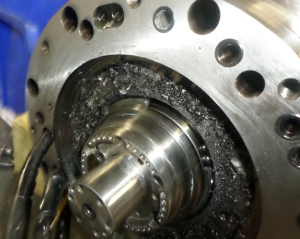 Coolant, moisture, dirt, and machining debris can enter a spindle through damaged seals, improper air pressure, or poor installation practices. Once contamination reaches the bearings, it can damage precision surfaces and interfere with lubrication.
As bearing surfaces deteriorate, friction may increase and create additional heat. The spindle may also begin producing abnormal noise, vibration, or changes in surface finish.
If a spindle is overheating, maintenance managers should inspect the surrounding machine conditions. A failed seal, loss of positive air pressure, damaged rotary union, or coolant intrusion may be the true cause of the problem.
Temperature Should Be Evaluated With Other Symptoms
Temperature alone does not always identify the cause of a spindle problem. It should be evaluated along with vibration, noise, runout, load, part quality, and operating history.
A spindle that runs slightly warmer but remains stable may not require immediate removal. However, a spindle with rising temperature, increasing vibration, unusual noise, poor surface finish, or inconsistent tool performance should be investigated quickly.
Maintenance teams should record when the issue occurs, the spindle speed, the load, the type of cut, the warm-up time, and any machine alarms. This information can help a spindle repair provider diagnose the problem more accurately.
When Should a Maintenance Manager Take Action?
A sudden temperature increase should never be ignored, especially when the spindle has historically operated at a stable temperature. The machine should also be evaluated if the spindle overheats at lower speeds, takes significantly longer to stabilize, or becomes hotter after recent maintenance.
Continuing to operate a spindle with abnormal heat can turn a repairable problem into more extensive damage. Bearing failure may damage the shaft, housing, taper, motor components, or other internal surfaces. Addressing the warning signs early can reduce downtime and help control repair costs.
Why Maintenance Managers Trust Motor City Spindle Repair
Motor City Spindle Repair understands that maintenance managers need more than a replaced bearing. They need to know why the spindle failed and whether it is ready to return to production.
Every spindle receives a complete evaluation to identify the damage and determine the likely cause of failure. Our technicians inspect the bearings, lubrication system, fits, preload, seals, taper, shaft, housing, and surrounding components before recommending the necessary repairs.
After the rebuild, the spindle is tested under controlled operating conditions. Temperature, vibration, noise, and overall performance are monitored throughout the run-in process to verify that the spindle operates properly before it leaves our facility.
Motor City also offers free evaluations and backs completed repairs with a one-year in-service warranty. When spindle temperature begins telling you something is wrong, our team is ready to help you understand the problem and determine the best path forward.
CONTACT US ANYTIME IF YOU would LIKE TO CHAT WITH OUR EXPERTS OR STOP BY OUR 25,000 SF MANUFACTURING FACILITY LOCATED IN DEARBORN, MICHIGAN!
(734) 261-8600 OR EMAIL US AT SALES@MOTORCITYREPAIR.COM
Need a FREE ESTIMATE? Click HERE

To view our most recent blog post, click HERE