Before You Install a Rebuilt CNC Spindle: What Maintenance Managers Should Check
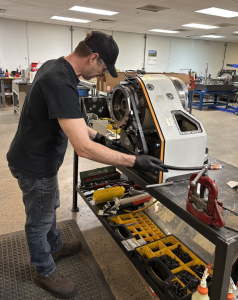 When a rebuilt spindle arrives at your facility, getting the machine back into production is usually the priority. Jobs are waiting, operators need their equipment, and every additional hour of downtime puts pressure on the maintenance team.
However, a successful return to production starts before the spindle is installed. The machine’s supporting systems, installation conditions, and original failure history all deserve attention.
For maintenance managers, this is an opportunity to address unresolved problems, coordinate the installation, and establish a clear record of how the machine performs after the repair.
Review the Original Failure Before Installation
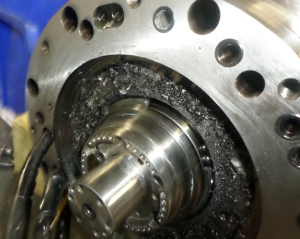 Start by reviewing the spindle inspection findings and failure analysis with your maintenance team and repair provider. Understanding the damage found during disassembly can help identify machine conditions that need further investigation.
Bearing damage, contamination, overheating, or evidence of a crash may provide useful clues. Those findings should be considered alongside alarm history, operator observations, maintenance records, and the application in which the spindle was running.
A failure analysis may identify likely contributing factors without proving every aspect of the original cause. Ask questions about unclear findings and determine which machine checks are appropriate before installation.
If a lubrication interruption or cooling problem contributed to the failure, that condition needs attention before the rebuilt spindle returns to service. Otherwise, the repaired unit may be exposed to the same conditions that damaged the original components.
Confirm the Spindle and Installation Requirements
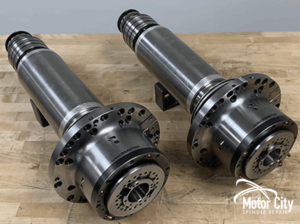 Before scheduling the installation, verify that the returned spindle matches the machine and intended configuration. Review the spindle identification, repair documentation, and any instructions supplied with the unit.
Confirm whether the rebuild involved changes that affect installation or startup. Your team should understand any requirements for lubrication, cooling, connections, orientation, or commissioning before work begins.
Have the current machine manufacturer’s service procedures available. Installation methods, torque values, alignment requirements, and startup routines vary between spindle designs. A procedure used successfully on one machine should not automatically be applied to another.
Coordinate qualified personnel, the required lifting equipment, and any machine service support in advance. Preparation helps prevent delays once the machine is open and the installation is underway.
Inspect the Machine’s Lubrication System
For spindles that depend on an external lubrication system, verify that the system is ready to operate according to the machine manufacturer’s specifications.
Checking the reservoir level is only part of the process. The maintenance team should also evaluate the applicable pumps, lines, fittings, filters, metering components, and alarms using the prescribed service procedures.
Confirm that the lubricant is correct for the spindle and system. Avoid substituting products or changing delivery settings without approval from the appropriate manufacturer or service provider.
Some spindle designs use grease lubrication and do not rely on a machine-fed oil system. The checks should match the actual design rather than a general assumption about how all spindles are lubricated.
Document the verification work so the team has a record of what was checked before startup.
Verify Cooling and Air Supply Where Required
If the spindle uses a cooling circuit, inspect the associated equipment before returning the machine to operation. Review coolant condition, leaks, hoses, filters, and chiller operation according to the manufacturer’s requirements.
Confirm the specified fluid, flow, and temperature settings. A running chiller does not necessarily establish that the entire circuit is operating correctly.
Where the spindle requires air for sealing, purging, or other functions, verify the supply quality and operating conditions specified for that system. Review filters, regulators, connections, and relevant alarms.
These supporting systems can be easy to overlook when attention is focused on the spindle itself. Assign responsibility for checking them before the first startup.
Prepare a Clean Installation Area
Keep the rebuilt spindle protected until the machine and installation team are ready. Follow the repair provider’s handling and storage instructions, including guidance for protective covers and shipping restraints.
Prepare the machine’s mounting area using the manufacturer’s cleaning and inspection procedures. Examine accessible mating surfaces for contamination, damage, or other conditions that could interfere with proper installation.
Use the designated lifting points and suitable handling equipment. Avoid placing loads on components that were not designed to support the spindle’s weight.
For maintenance managers, a clean and organized installation area also helps the team keep track of connections, hardware, and inspection findings throughout the job.
Inspect Toolholders Before They Return to Service
The toolholders that were in use before the failure deserve attention before production resumes. Review their condition, especially if the machine experienced a crash, tool retention issue, or recurring vibration.
Inspect the applicable contact surfaces and retention components using the appropriate procedures. Remove questionable assemblies from service until they can be evaluated.
Confirm that the tooling is suitable for the intended speed and application. Follow the relevant tool and holder requirements for assembly, balance, and operation.
Returning damaged or unsuitable tooling to the machine can complicate commissioning and make it harder to determine whether a new symptom comes from the spindle or the tool assembly.
Follow the Installation Procedure Carefully
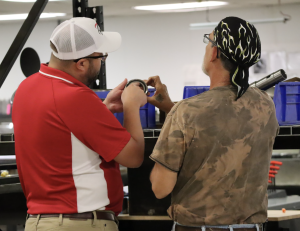 Installation should follow the machine manufacturer’s service instructions and any applicable guidance from the spindle repair provider.
Depending on the design, the work may include mounting checks, alignment, drive component inspection, electrical connections, sensor verification, and tool retention testing. Qualified personnel should complete the required checks with appropriate equipment.
Keep a record of the work performed and any measurements taken. If the team encounters an unexpected fit, connection, or adjustment issue, resolve it before proceeding.
Maintenance managers should build these verification steps into the downtime plan. A realistic installation schedule gives the team time to complete the work properly and communicate any problems before production restarts.
Complete the Required Startup and Run-In
A rebuilt spindle may have already completed testing at the repair facility, but the installed machine still needs the prescribed startup and commissioning checks.
Follow the supplied instructions for any required bearing run-in, as well as the machine manufacturer’s applicable warm-up procedure. Confirm the correct sequence with the repair provider if the instructions are unclear.
Avoid creating a universal startup routine based on another machine’s requirements. Spindle designs, lubrication methods, and operating limits differ.
Monitor the specified conditions during commissioning and record the results. If the machine develops an unexpected alarm, abnormal noise, or concerning temperature or vibration behavior, pause the process and consult the appropriate service provider before continuing.
Establish a Baseline Before Full Production
Once the installation and startup checks are complete, document the machine’s initial condition.
Record relevant measurements and observations under clearly defined operating conditions. Depending on the equipment and available resources, that may include temperature, vibration, runout, tool retention, and performance on an approved test part.
A useful baseline includes the spindle speed, operating time, measurement location, and tooling involved. Those details help make future comparisons meaningful.
Coordinate with production and quality personnel to verify that the machine meets the applicable requirements before releasing it for normal work. Passing a basic rotation check alone does not establish that the machine is ready for every production operation.
Communicate the Return-to-Service Plan
Operators should know what work was completed and which symptoms require reporting. Share any updated warm-up instructions, operating requirements, or monitoring expectations with the people who will run the machine.
Include the repair documentation and commissioning results in the maintenance record. That information can support future troubleshooting and help the next shift understand the machine’s condition.
During the initial return to production, keep communication open between maintenance, operations, and quality. Early observations are easier to investigate when the team records them clearly and reports them promptly.
Why Maintenance Managers Should Trust Motor City Spindle Repair
 Maintenance managers need a spindle repair partner who understands the pressure that comes with a machine being down. They also need clear information to help their team prepare for the spindle’s return.
At Motor City Spindle Repair, our experienced technicians inspect the spindle components, evaluate the damage, and determine what the unit needs before quoting the rebuild. Our free evaluations and repair estimates help maintenance teams make informed decisions.
Our rebuild process includes testing, balancing, and vibration analysis to evaluate spindle operation before the unit heads back to the customer. We also provide a detailed failure analysis to help your team understand the findings and investigate conditions that may have contributed to the failure.
That documentation gives maintenance managers useful information for planning machine checks before installation. Repair facility testing and careful commissioning in the machine work together to support a reliable return to production.
With emergency repair services and a one-year in-service warranty, Motor City Spindle Repair supports maintenance teams through urgent breakdowns and planned rebuilds.
If your facility needs a CNC spindle rebuild, contact Motor City Spindle Repair for a free evaluation. Our team can help you understand what the spindle needs so you can plan the repair and return to service with clearer information.
CONTACT US ANYTIME IF YOU would LIKE TO CHAT WITH OUR EXPERTS OR STOP BY OUR 25,000 SF MANUFACTURING FACILITY LOCATED IN DEARBORN, MICHIGAN!
(734) 261-8600 OR EMAIL US AT SALES@MOTORCITYREPAIR.COM
Need a FREE ESTIMATE? Click HERE

To view our most recent blog post, click HERE